How to Package Candles for Shipping
A B2B guide to matching candle containers, protective inserts and shipping cartons for repeatable parcel and wholesale packing.
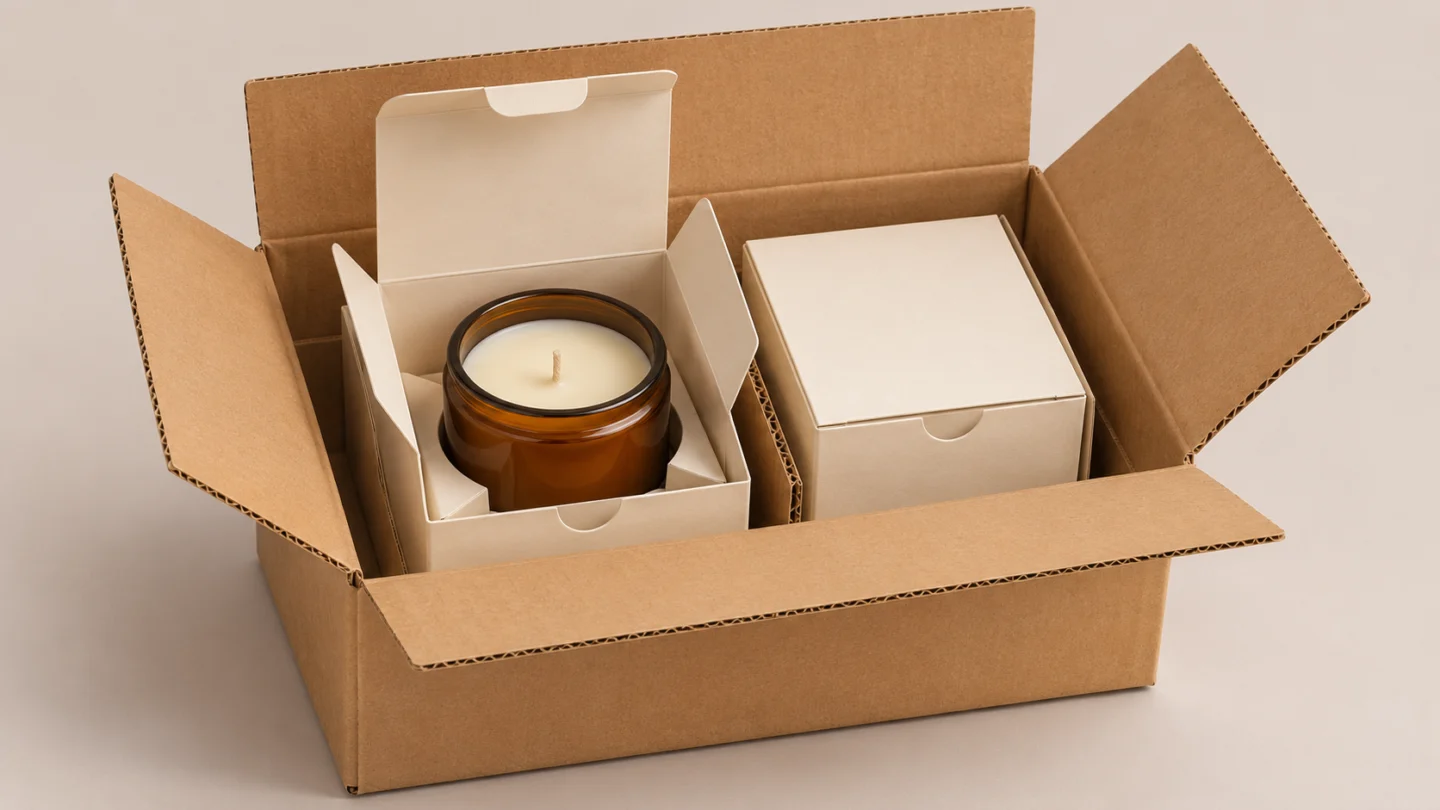
Candle Transport Packaging Design Concept
Design Concept Notice
The product visuals in this article are AI-generated design concepts. None are photographs of LUX BOX client projects or approved production samples.
To decide how to package candles for shipping, work from the filled candle outward: a suitable inner box, a fitted insert, separation between units and a corrugated outer carton specified for the shipment. Evaluate the assembled pack for its distribution route before ordering it in volume.
For candle brands and wholesale buyers, the objective is repeatable protection across an entire order. A presentation box can support the brand experience, but its appearance does not establish transport performance. The vessel, insert, inner box and shipping carton need to work together as one controlled specification.
Why candle shipments need a complete protective system
Glass jars can break when they strike another container or a hard surface. Movement inside an oversized cavity creates opportunities for repeated contact. External loads and transport vibration introduce different stresses, particularly when several candles travel in one carton.
A thicker-looking gift box does not resolve every risk. A well-presented jar can still move vertically or shift when the pack changes orientation. In a multi-unit shipment, an unsupported divider can allow adjacent packs to collide.
FedEx’s guidance for breakables emphasizes cushioning, movement control and an appropriate outer package. Translate those principles into the actual filled SKU and shipping method, rather than treating one packaging photograph as a validated solution.
Choose the Individual Retail Box for Its Role
The individual retail box surrounds the candle vessel and supports presentation, identification and handling. Select it alongside the transport pack.
- Folding cartons: useful for organized retail lines and individual SKU identification. Review how the insert supports the filled vessel and how the carton closes after loading.
- Rigid boxes: provide a formed presentation structure. They still need suitable internal support and an outer shipping arrangement.
- Custom candle boxes: allow the cavity, closure and artwork to follow the product brief. A custom size alone does not establish cushioning.
- Candle gift boxes: can hold a single jar or a coordinated set. Accessories and differently weighted items need their own positions.
For visual options, see our candle packaging ideas guide. Keep that design decision separate from approval of the complete transport configuration.
Select inserts for fit, support and the packing process
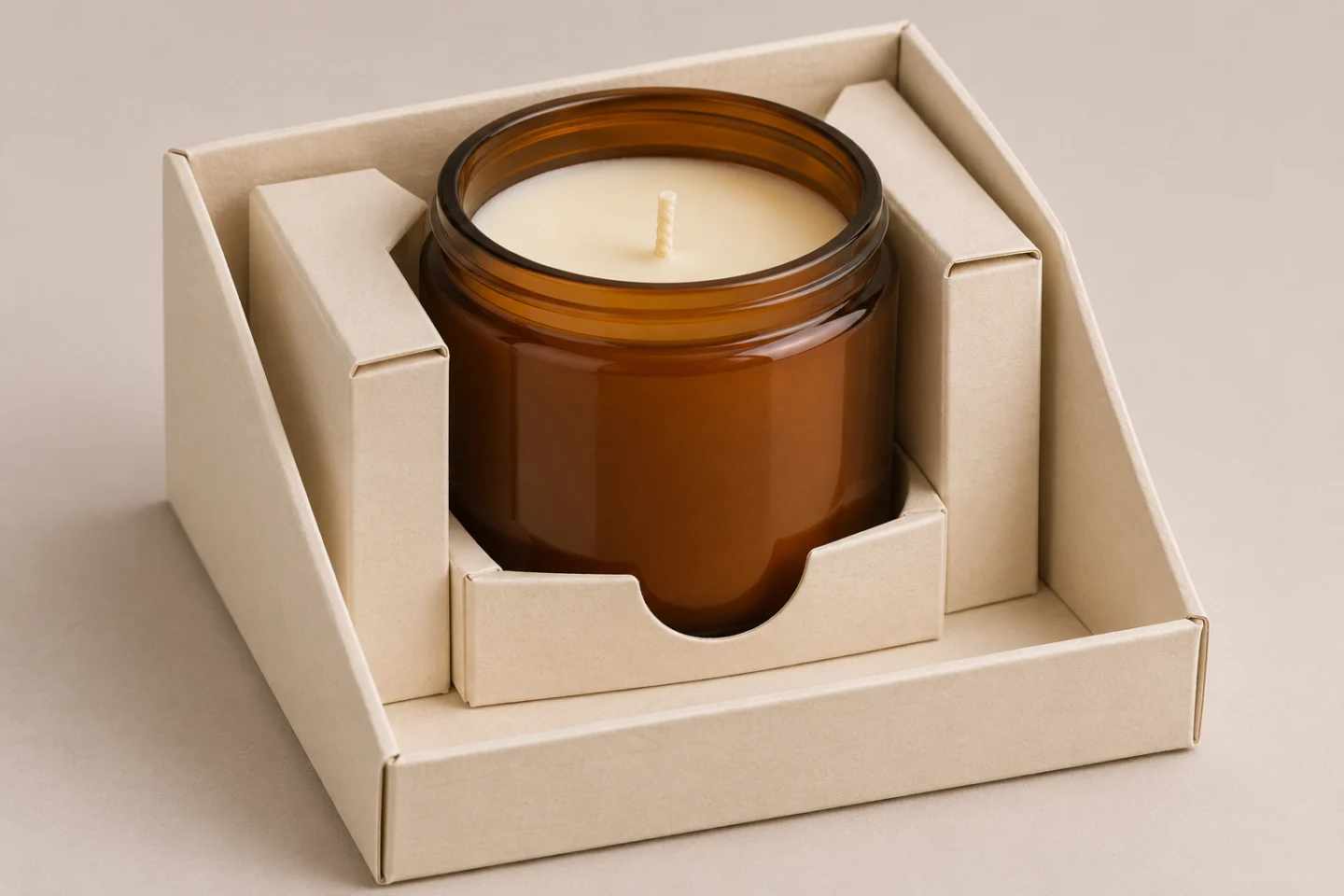
Start with the finished container dimensions and filled weight, including its lid and any accessories. Identify where the insert contacts the vessel, how it supports the base and what prevents movement in other directions. A locating tab is not automatically a cushioning system.
| Insert option | Useful design role | What to confirm |
|---|---|---|
| Paperboard | Folded tabs, platforms or compartments that locate the candle inside its primary box | Contact points, assembly consistency, retention and whether additional cushioning is needed |
| Corrugated | Cells, partitions, pads or folded supports within an inner or outer pack | Board construction, load paths, separation and response in the complete packed configuration |
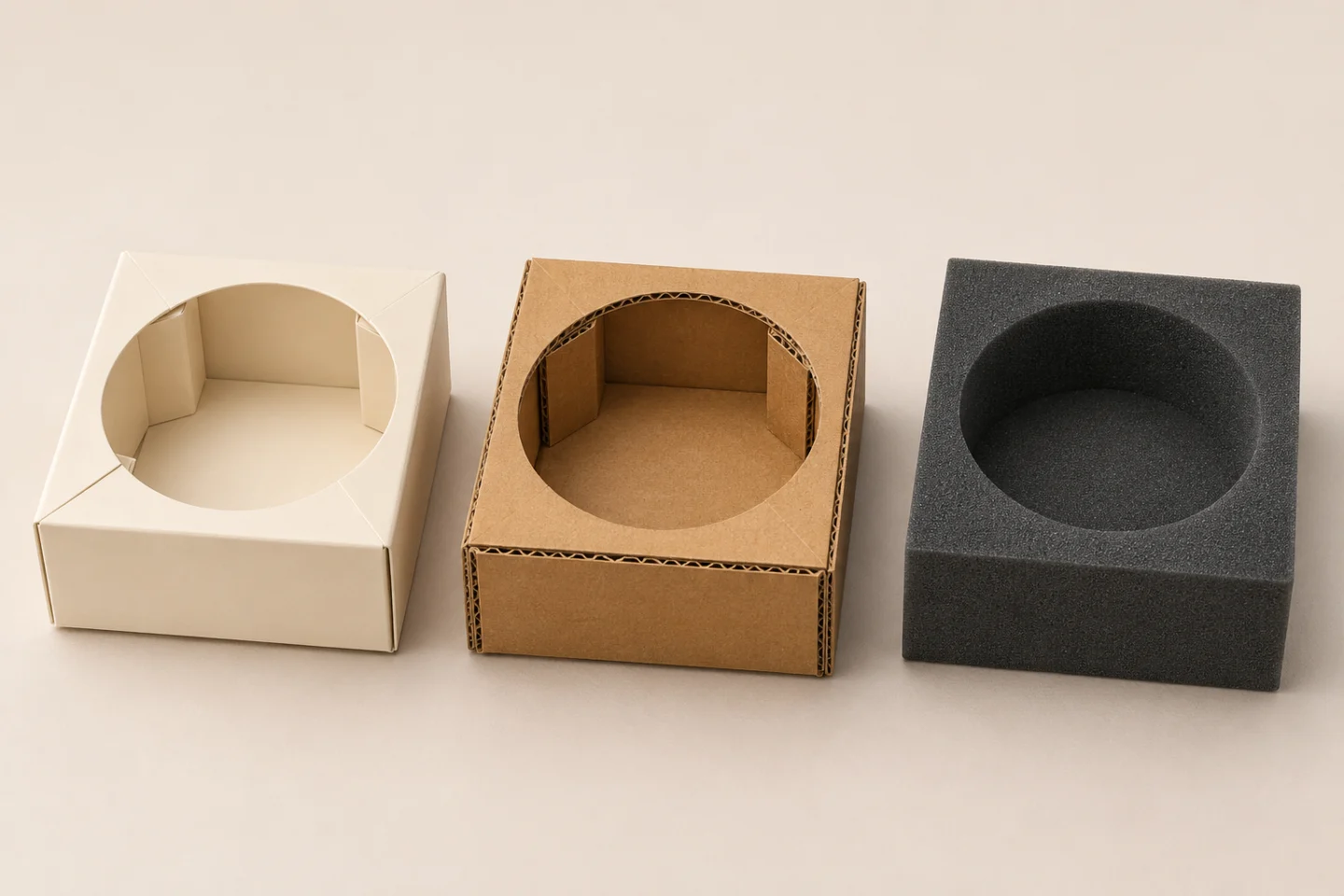
| EVA foam | A shaped cradle around a defined vessel profile | Proposed grade, geometry, thickness, contact suitability and performance with the filled product |
Avoid choosing by material name alone. Paperboard and corrugated layouts can work differently depending on their folds and supports. EVA also needs a product-specific specification; a close-fitting cutout does not prove that the proposed grade provides adequate cushioning.
When packaging candles for shipping, check both retention and removal. The packing team should be able to place the candle correctly without forcing the glass against a narrow opening. The receiver should be able to remove it without pulling on a fragile lid or rim.
Combine inner packs with a specified corrugated outer carton
Use the outer carton to contain and support the shipment, with an internal arrangement that keeps units separated. Record the number and orientation of inner boxes, divider layout, support above and below the products, closure method and packed gross weight.
A wholesale master carton and an individual parcel may need different configurations. A carton that performs within a palletized load should not automatically be approved for loose-parcel handling. UPS packaging guidance recommends suitable cushioning and box construction, including double-boxing for fragile items; the actual arrangement still needs assessment for the product and route.
Specify board construction and agreed strength requirements with the supplier. Do not set the unit count from a “heavy-duty” label or wall count alone. Consider the packed load, internal supports and distribution conditions together. Browse corrugated box structures when preparing that discussion.
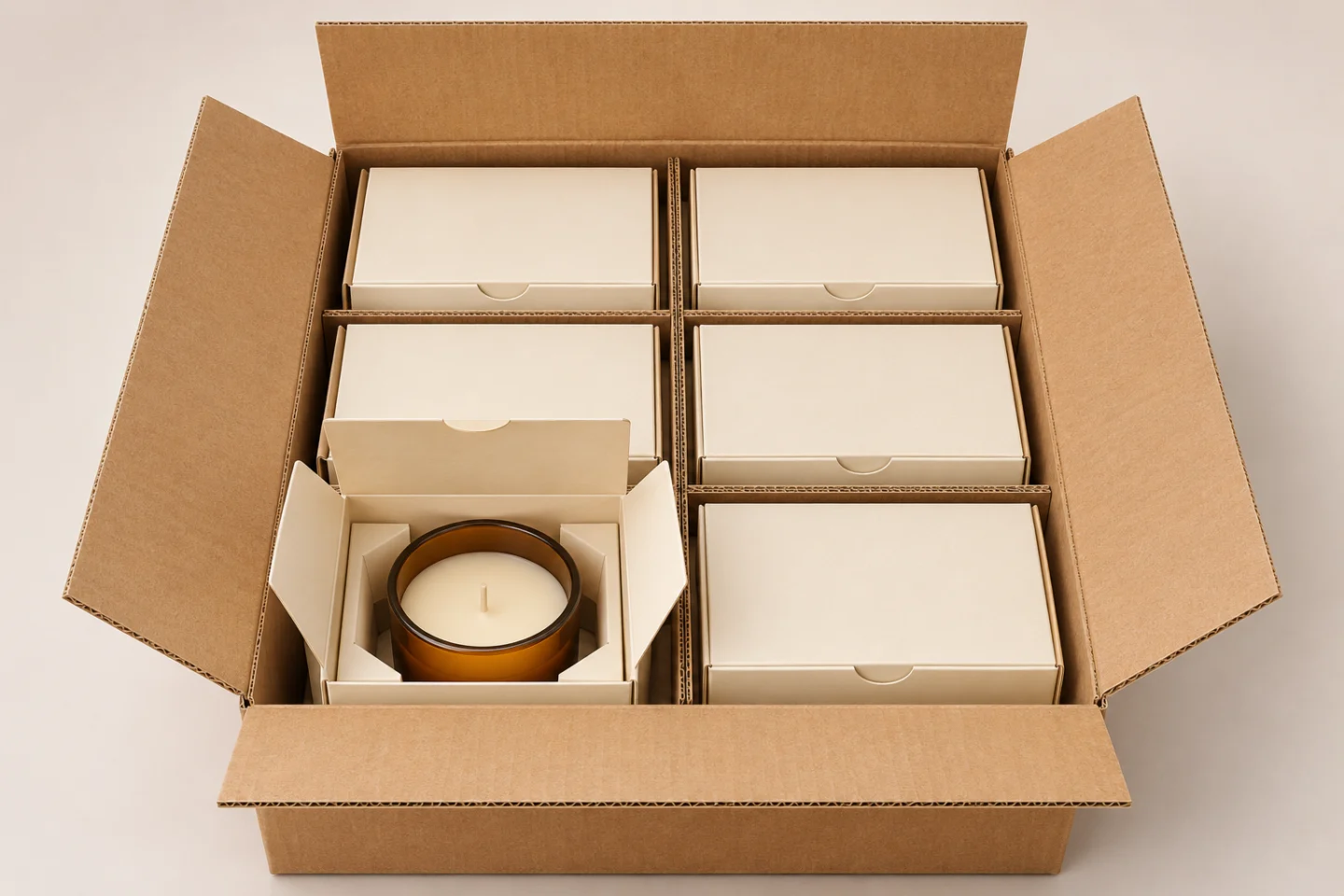
Control movement in every relevant direction
Check a packed sample in its intended orientation and when it is carefully reoriented. Look for sliding jars, displaced inserts, loose lids and inner boxes that can migrate into each other. This is a fit and assembly review, not a substitute for transit testing.
Assess clearance around the product together with the proposed cushioning structure. Too much freedom can permit contact; forcing a jar into a cavity can create loading difficulties and undesirable contact points. There is no universal gap or insert thickness for every candle.
The best way to package candles for shipping is to control the whole assembly, including restraint above the product. A divider between jars does not resolve an unsupported space over their lids.
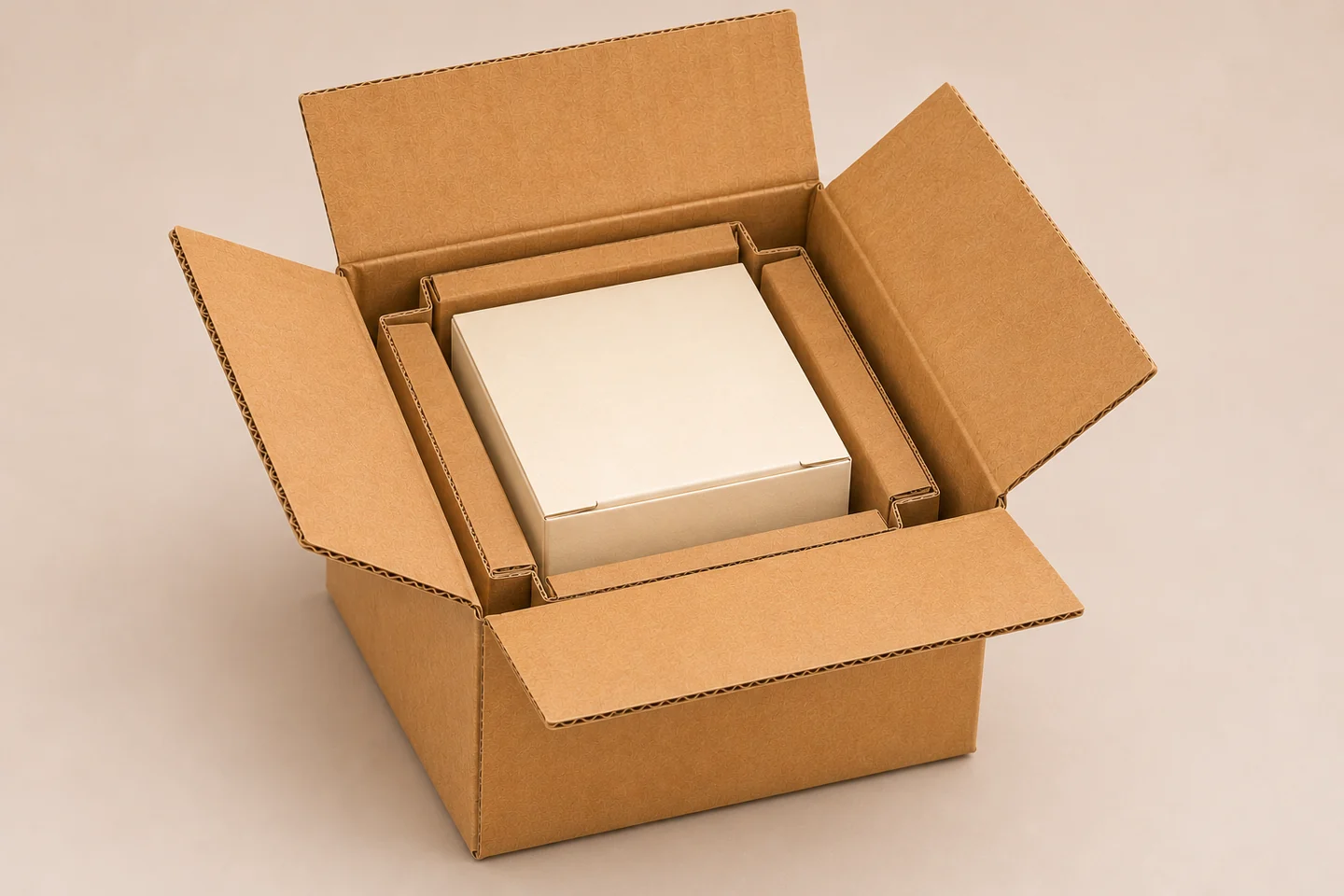
Adapt the pack to the candle container and assortment
| Candle type | Practical review priorities |
|---|---|
| Glass jar candles | Support and separation around the filled jar, vulnerable contact points, lid retention and access for removal |
| Tin candles | Dents, lid movement, label scuffing and contact between adjacent tins; do not assume the same fit as a glass SKU |
| Ceramic containers | Chipping and localized contact at edges, rims and lids, as well as variation in the finished container profile |
| Multiple candle gift sets | Separate positions for different sizes and weights, with accessories prevented from moving into the vessels |
For candles without a vessel, see our guides to pillar candle packaging and taper candle packaging for format-specific support and handling considerations.
Record product-specific temperature limits and seasonal exposure separately. A locating insert or attractive paper box should not be treated as temperature control. Keep the candle manufacturer’s product requirements in the shipping brief.
Prepare a purchasing brief for bulk candle shipments
Before requesting a quotation, provide:
- Finished vessel dimensions, dimensional variation and filled weight for each SKU.
- Primary box, insert and accessory requirements, with physical product samples where available.
- Units per inner pack and master carton, including mixed-SKU combinations.
- Parcel, palletized wholesale or other distribution arrangements, destinations and handling expectations.
- Board and insert references, packing sequence, closure method and acceptance criteria.
Compare quotations on the same packed configuration. Include insert assembly, loading labor, supplied form, tooling and carton quantity, rather than comparing only a box’s unit price. Check the packed dimensions and gross weight before reviewing freight costs.
Treat candle packaging ideas for shipping as starting points for a sample built around your actual products. Retain an approved component list and packing instructions so a repeat order follows the same configuration. Reassess changes to the vessel, material or carton quantity before substituting them into the pack.
Test the complete filled package and define acceptance
Agree a test plan that reflects the distribution route. Defined drops or other shock events address impact risks; vibration evaluates the pack under a selected movement profile; compression assessment addresses relevant stacking or loading conditions. These checks answer different questions.
ISTA’s procedure overview distinguishes screening tests from simulations associated with distribution environments. Select the applicable procedure with a packaging test provider; parcel and unitized-load procedures are not interchangeable, and their sequences differ.
Use representative filled products and production-like packaging. Agree beforehand what constitutes acceptable product and packaging condition. After evaluation, inspect containers, closures, inserts and saleable inner boxes, not only the outer carton. Record the SKU, component revisions, quantity, procedure and results.
A test result applies to the evaluated configuration and conditions. It should not become an unsupported promise that every candle or route is covered. LUX BOX project requirements, sampling and any requested testing should be agreed for the specific order.
Frequently asked questions
What is the best packaging for shipping candles?
Choose a complete system matched to the filled candle and delivery channel: individual support, separation and a specified outer carton. Compare alternatives using the same SKU, unit count and acceptance criteria; the most elaborate presentation box is not automatically the best transport pack.
How do you protect glass candle jars in transit?
Prevent jar-to-jar contact, support the filled container and control movement inside its inner pack and outer carton. Review vulnerable rims and lids, then validate the assembled configuration for the intended handling environment.
What insert is best for shipping candles?
Select the insert by its required job: location, separation, support and any cushioning requirement. Compare paperboard, corrugated or EVA proposals using the actual vessel and packing process. A material label or photograph cannot establish the result.
Are corrugated boxes suitable for shipping candles?
Corrugated cartons can form the outer shipping pack, provided their specification, internal protection and load arrangement suit the shipment. A corrugated outer box alone does not stop an unsupported jar moving inside it.
Turn the shipping brief into a packaging specification
Start with the Candle Packaging collection to discuss individual boxes and inserts alongside the bulk shipping arrangement. Our luxury candle packaging design guide covers the visual decisions that follow a workable structure.
Contact LUX BOX with your vessel details, filled weights, planned quantities and distribution route. Our team can review the box, insert and outer-carton requirements with you before the specification and quotation are finalized.