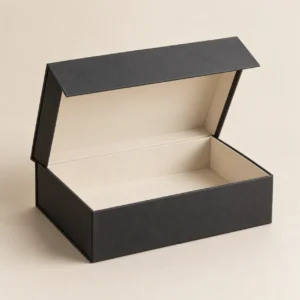
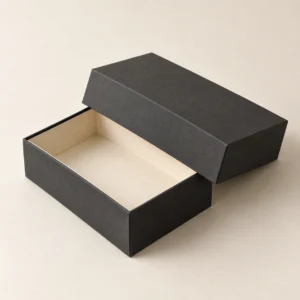
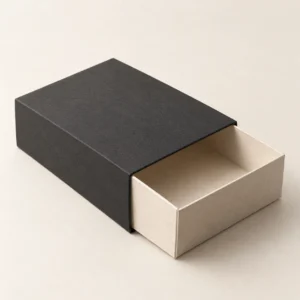
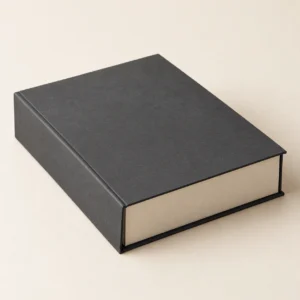
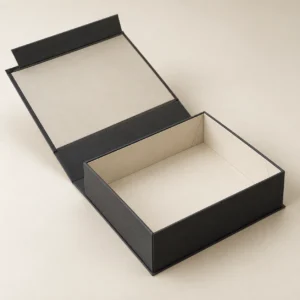
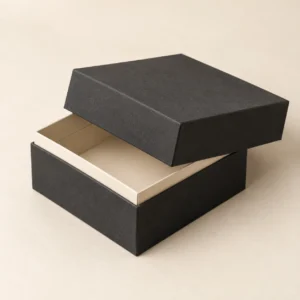
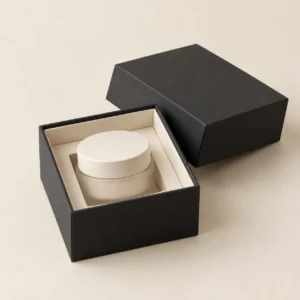
Custom rigid boxes use a structural board core with a separate presentation surface. Compare lid-and-base, magnetic, drawer, book-style, shoulder-neck and collapsible constructions for premium branded packaging.
Compare the opening and receiving workflow
Brand owners and wholesale packaging buyers should choose an opening structure before specifying decorative effects. A lift-off lid needs room for removal. A drawer needs travel space and a suitable pull. A book-style cover changes the reveal and hinge arrangement. Collapsible designs introduce corner connections and local assembly. These are practical differences that affect storage, filling and the customer experience.
Treat core, wrap and insert as separate choices
Greyboard provides the structural core. The wrapping paper determines much of the visible colour and texture, while the insert manages the product position. Specify these components independently so quotations can be compared on the same basis. Formed rigid boxes can occupy substantial shipping volume; compare actual packed carton dimensions before deciding whether a collapsible alternative offers value for the receiving site.
Information for a comparable quotation
Supply finished product dimensions, weight, desired opening, receiving-site assembly constraints, wrap references and the insert arrangement. Approve closure fit and visible wrapped corners on the physical sample.
Order planning
Rigid-box orders generally start at 1,000 pieces, with a usual production lead time of 35 days. Agree the wrap, insert and closing sample before the production start is confirmed.
Related selections: Greyboard, Specialty Paper, Gift Packaging.
Request a quote for rigid boxes
Send the actual product dimensions, preferred structure, material and finish requirements, artwork or reference, estimated order quantity and destination country. LUX BOX will review the specification and sampling scope for your rigid boxes project.
Request a Quote
Questions about rigid boxes
Is every rigid box foldable?
No. Conventional set-up rigid boxes retain their formed shape. Collapsible rigid boxes use a specific folding construction that must be assessed separately.
Does a thicker greyboard automatically make a better box?
Thickness is only one part of the construction. Box size, wrap, joints, lid fit and product support also matter. Compare samples against the actual use.
Are magnetic and book-style boxes the same?
Book style describes an opening arrangement; magnetic describes a closure. They can be combined, but a book-style proposal does not automatically include magnets.