
Glass Candle Jar Packaging: Protection and Presentation
Match a glass candle jar to its outer paper box and insert, with practical checks for fit, removal, single jars and multi-jar sets.

Packaging Design Inspiration
Useful candle jar packaging ideas connect the finished glass vessel with a paper box, insert and opening that work together. Measure the lidded, labeled product, define where it is positioned and supported, and check how it is loaded and removed. Develop the presentation around that physical arrangement.
For candle brands and packaging buyers, glass candle packaging involves several related components. The jar contains the candle; the retail box presents it; the fitment positions or supports it. Any shipping arrangement needs its own review. Here, the design task is matching the finished candle to its paper packaging.
Begin with the filled vessel and its contact points
A jar’s silhouette does not reveal every packaging requirement. A broad lid may extend beyond the body, a shoulder may narrow below the rim, and a raised label can meet an insert before the glass does.
Filled weight also matters. A paper opening that locates the jar near its upper body does not automatically support the weight beneath it. Consider the cavity, supporting platform, box base and closure together.
Identify where contact is intended and where it could cause problems. Ask whether a paper edge catches a label, whether a decorative surface rubs during loading and whether the lid stays clear when the box closes. These observations help define the fitment before decoration is finalized.
Measure the actual lidded product
Supply representative finished candles with the intended lid, label and accessories. Record the widest overall width and depth, total fitted height, base profile and filled weight. Include any projecting knob, handle, decoration or uneven outline.
The same approach applies to candle holder packaging: use the finished item being packed, including any foot or decorative projection. A nominal volume or product-family name cannot describe all of that geometry.
| Vessel profile | What to record | What to review in the sample |
|---|---|---|
| Round jar | Maximum diameter, base diameter, shoulder and fitted lid | Where the insert meets the profile and how the jar lifts out |
| Square or rectangular jar | Width, depth, corners and intended orientation | Corner contact, label clearance and alignment within the box |
| Irregular or decorative vessel | Full outline, projections and suitable supporting surfaces | A shaped cavity, loading route and access without forcing the product |
Keep these product measurements separate from the box’s outside dimensions. The usable space depends on the assembled box, lining, insert and supports.
Board thickness, folds and overlaps also affect that relationship. Esko’s board definitions include folding and gluing allowances. Ask the structural supplier to resolve the actual construction rather than subtracting a fixed thickness from an exterior size.

Choose the paper box around the assembled pack
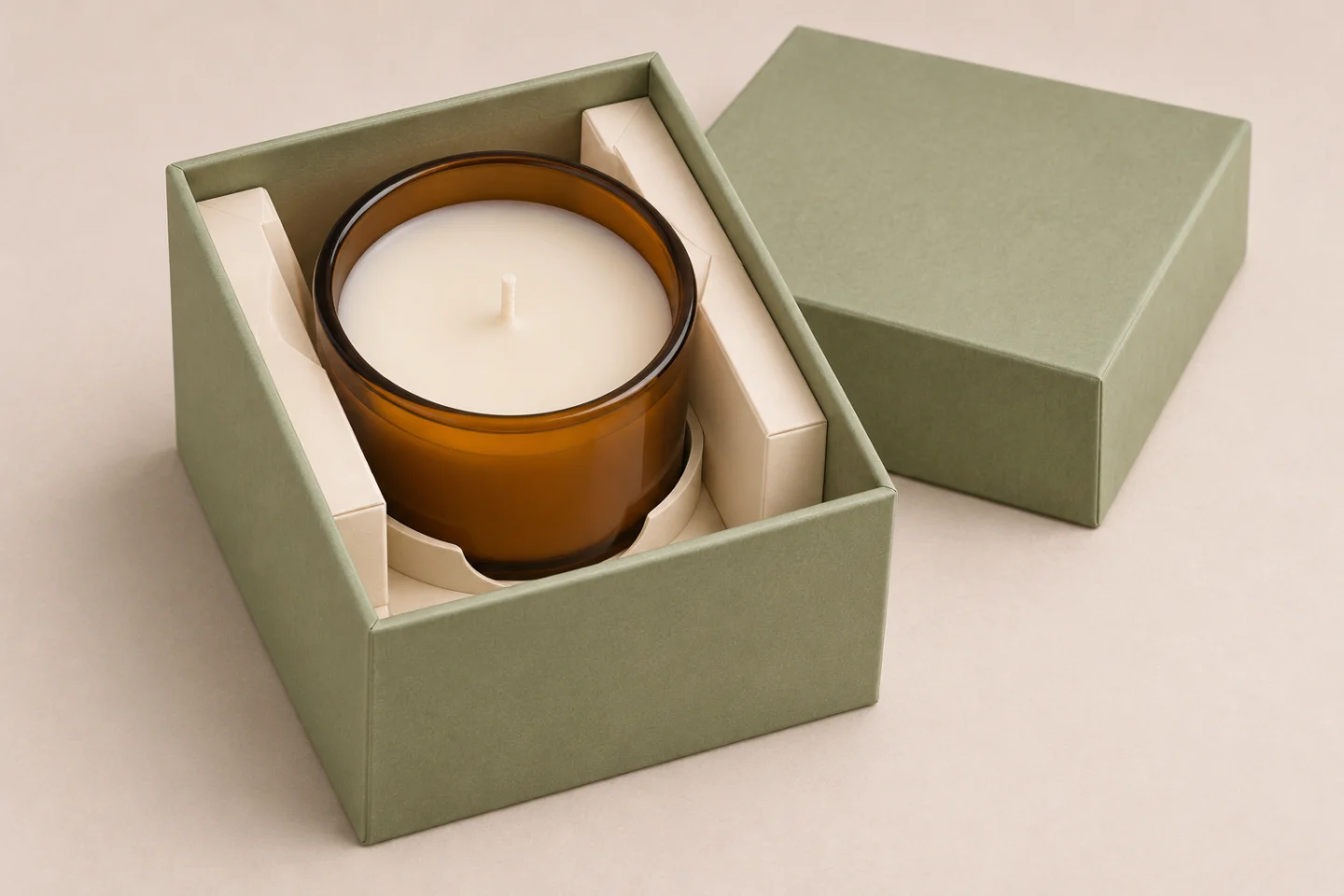
Compare packaging for glass candle jars around the complete product and intended opening. A folding carton can provide a printed retail format; a lid-and-base rigid box offers a removable cover; a hinged box or drawer creates a different access route.
Review the insert within each proposal. A tray may need room to slide, a deep base may conceal the gripping area, and an attached cover must clear the jar and lid. The style name alone does not establish usable space or suitability for a filled vessel.
For the broader relationship between dimensions, structure, drawing and artwork, use our candle box design guide. Keep the selected vessel reference attached to the drawing revision.
Separate insert location, support and removal
Give the fitment three clear tasks:
- Location: define the surfaces that keep the jar in its intended position.
- Support: identify what carries the filled weight and how it sits within the box.
- Access: provide a practical way to load and remove the candle.
A folded paperboard platform can combine an opening with supporting folds. Corrugated fitments can use pads, cells or other assembled supports. EVA proposals need a specified grade and profile. Review the actual geometry rather than ranking these routes by material name.
An opening must accommodate the relevant product variation and assembly process. Avoid forcing glass through a narrow paper edge or pulling the candle out by a lid that was not intended to carry it. An access notch can help fingers reach the vessel; it does not establish cushioning.
Our Candle Boxes with Inserts page provides fitment routes to compare with the actual outer box. Confirm cavity, support and available interior together so the same space is not allocated twice.
Plan single jars and sets as different layouts
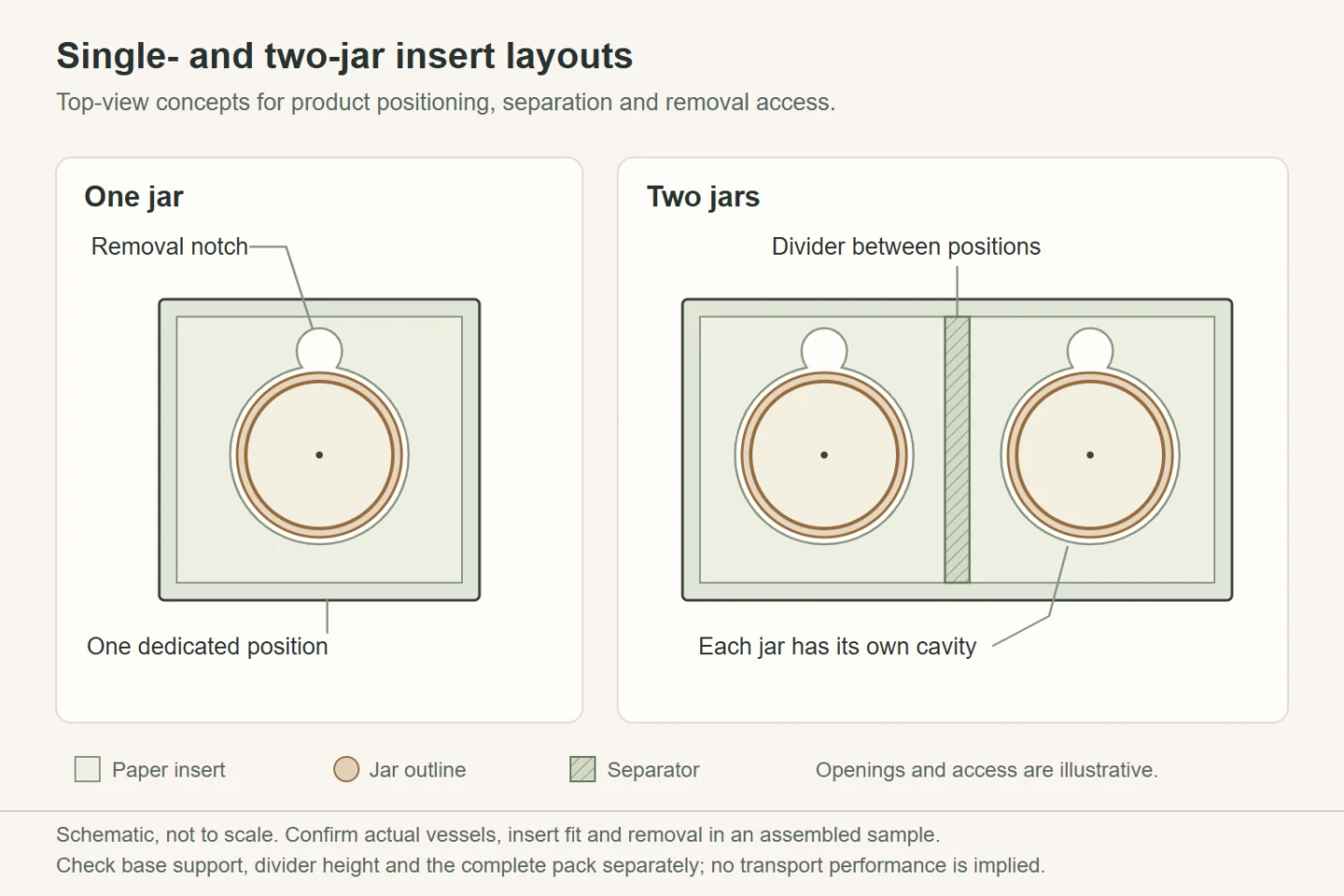
A single-jar box can organize the presentation around one opening and removal action. Confirm that the jar stays in its intended location when the complete pack is closed and handled during the agreed fit review.
A multi-jar set introduces more contact paths. Give each vessel a defined position and review the separation between bodies, shoulders, rims and lids. A low divider between narrow bases may not separate wider upper profiles.
Consider a continuous separator and individual cavities, then check their height, supporting construction and assembly with the actual set. Accessories also need positions that keep them from migrating toward the glass.
Review the removal sequence. Taking out the first candle should leave the remaining arrangement manageable. A top-view layout explains positions and access; it cannot establish the adequacy of hidden base supports or divider height.
Balance the reveal with comfortable product access
Presentation depends on more than an elaborate exterior. The height at which the jar appears, the visible border around it and the direction of its label all influence the opening experience.
A rigid box can frame a signature candle or coordinated gift set. Review its lid, hinge or drawer action with the insert loaded. A deep recess may hide the label or leave too little gripping space; raising the product may create a closure conflict. Resolve those choices through the sample.
If a cut-out displays the vessel, consider what remains exposed and how the opening affects the proposed carton. The decorative result and physical construction need a shared review.
Keep surface treatments purposeful. Choose paper and artwork that complement the vessel, then assess the finished arrangement rather than assuming a premium-looking box provides greater protection.

Match materials and finishes to the actual contact
Specify the structural board, visible wrap or lining and fitment separately. A folding carton and a wrapped rigid box use paper components in different roles; the jar-facing surface deserves its own description.
Check painted, coated, labeled or decorated vessels against the proposed contact material. Review loading, repeated removal and any visible marking on representative samples. A smooth-looking paper or foam name alone cannot establish compatibility with that finish.
Record print, lamination and other decoration as part of the approved specification. A change in lining, wrap or fitment can affect the available cavity or contact conditions even when the outside design looks unchanged.
Approve the filled sample and control changes
Evaluate candle jar box protection and presentation with the actual assembled product:
- Identify the jar, fitted lid, label, accessories and filled weight represented.
- Erect the box and fitment using the intended packing sequence.
- Load, close and reopen it; inspect contact, location and access.
- Review the printed or decorated reference for the properties it represents.
- Record accepted references, revisions and any conditions still unresolved.
Common mistakes include approving an empty box, overlooking a larger lid, checking only the insert’s top opening and assuming jars with the same nominal capacity share one profile.
A white sample can establish aspects of structure and fit. A printed sample may represent specific stock and finishes, but it is not automatically evidence of shipping performance. Our candle shipping guide covers the complete transport configuration.
Where components come from different teams, Glassware & Packaging Coordination describes keeping vessel, closure, box and insert references aligned. Review changes before accepting a substitute jar or lid.
Frequently asked questions
How should glass candle jars fit inside paper boxes?
Use an assembled box and fitment that position and support the complete candle while allowing controlled loading, closure and removal. Check the lid, shoulders, labels and relevant product variation. Approve the actual fit through samples rather than applying one clearance to every jar.
What insert prevents candle jar movement?
A shaped collar, folded platform or compartmented fitment can help locate a jar when developed around its profile. Select the construction by its required contact and supporting tasks. Verify the assembled result; paperboard, corrugated or EVA alone does not guarantee retention or cushioning.
How do you choose jar box dimensions?
Start with the finished candle’s maximum outline, fitted height and weight. Add the proposed insert, lining, supports and closure arrangement to the structural brief. Ask the supplier to confirm usable internal space and external box dimensions separately, then check them in a loaded sample.
Can one insert fit several jar sizes?
Only after each intended configuration has been reviewed. Similar capacity names can conceal differences in bases, shoulders, lids and labels. Confirm that the shared fitment provides the required position, support and removal access for each product before approving it across the range.
Connect the vessel and paper packaging specification
Compare LUX BOX candle packaging options using the complete jar, fitment, opening and display requirements. Retain the approved product and packaging references so future orders follow the agreed arrangement.
Contact LUX BOX with product photos, lidded dimensions, filled weight, set layout and packaging requirements to discuss the box and sampling scope.


