How to Choose Packaging Materials for Candles
Compare paperboard, kraft, greyboard, corrugated board and specialty papers by what each component needs to do.
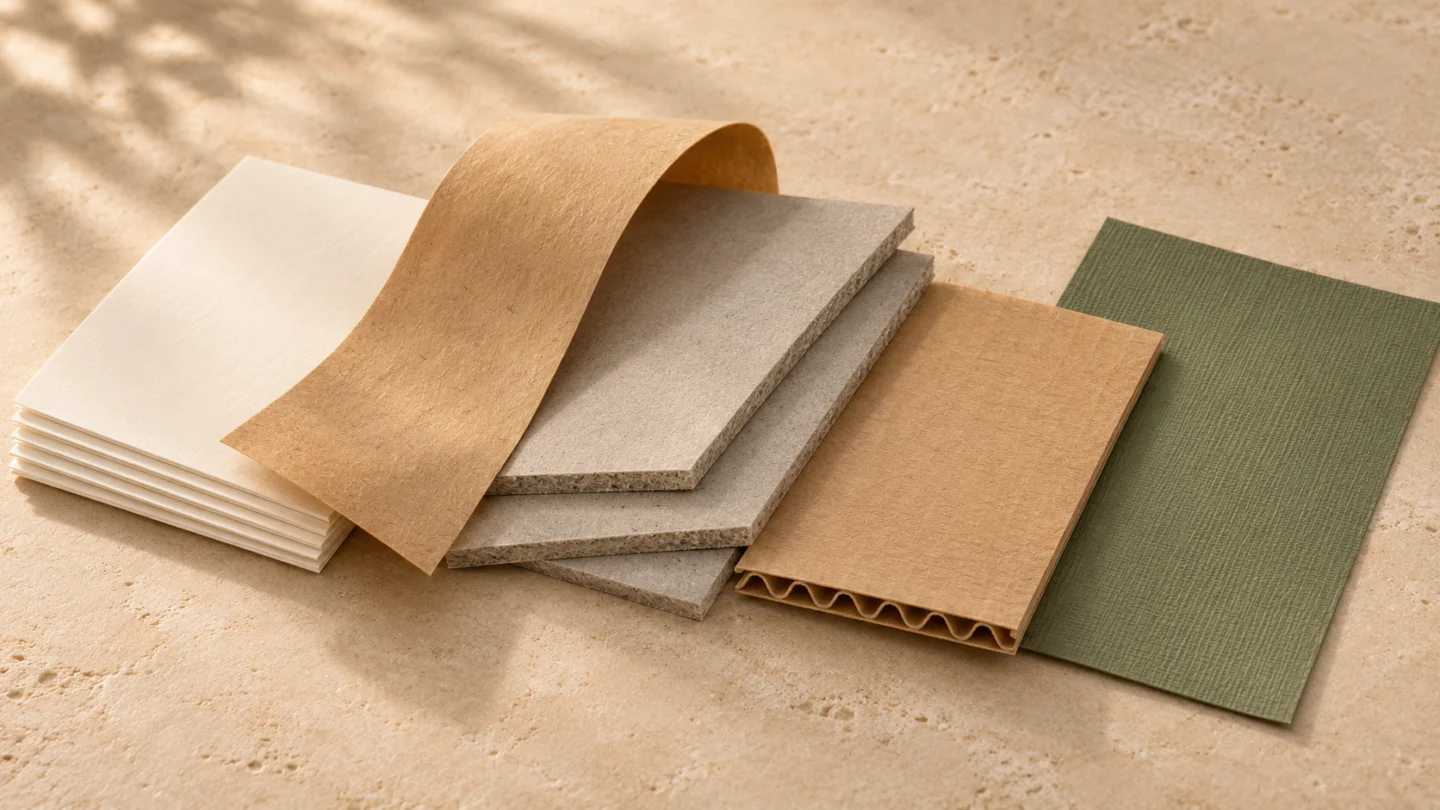
Candle Packaging Material Design
Design Concept Notice
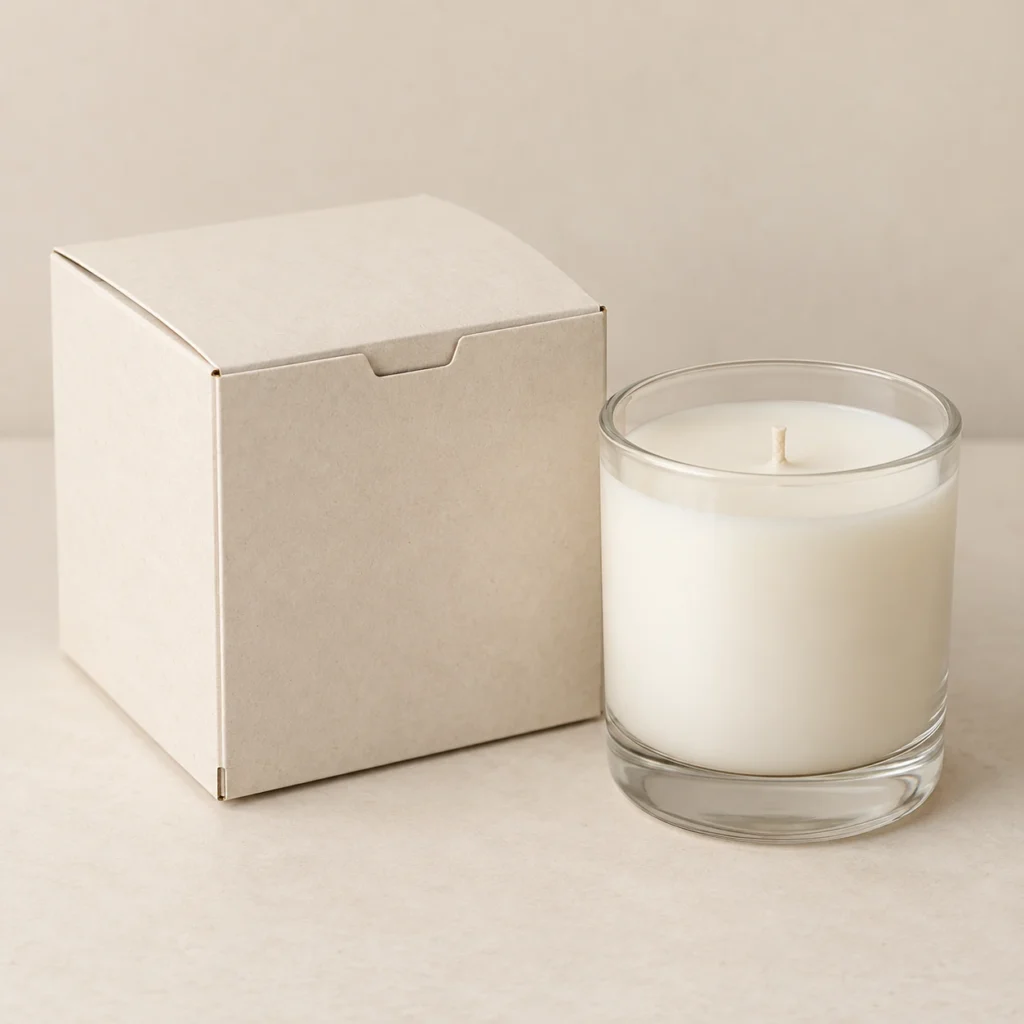
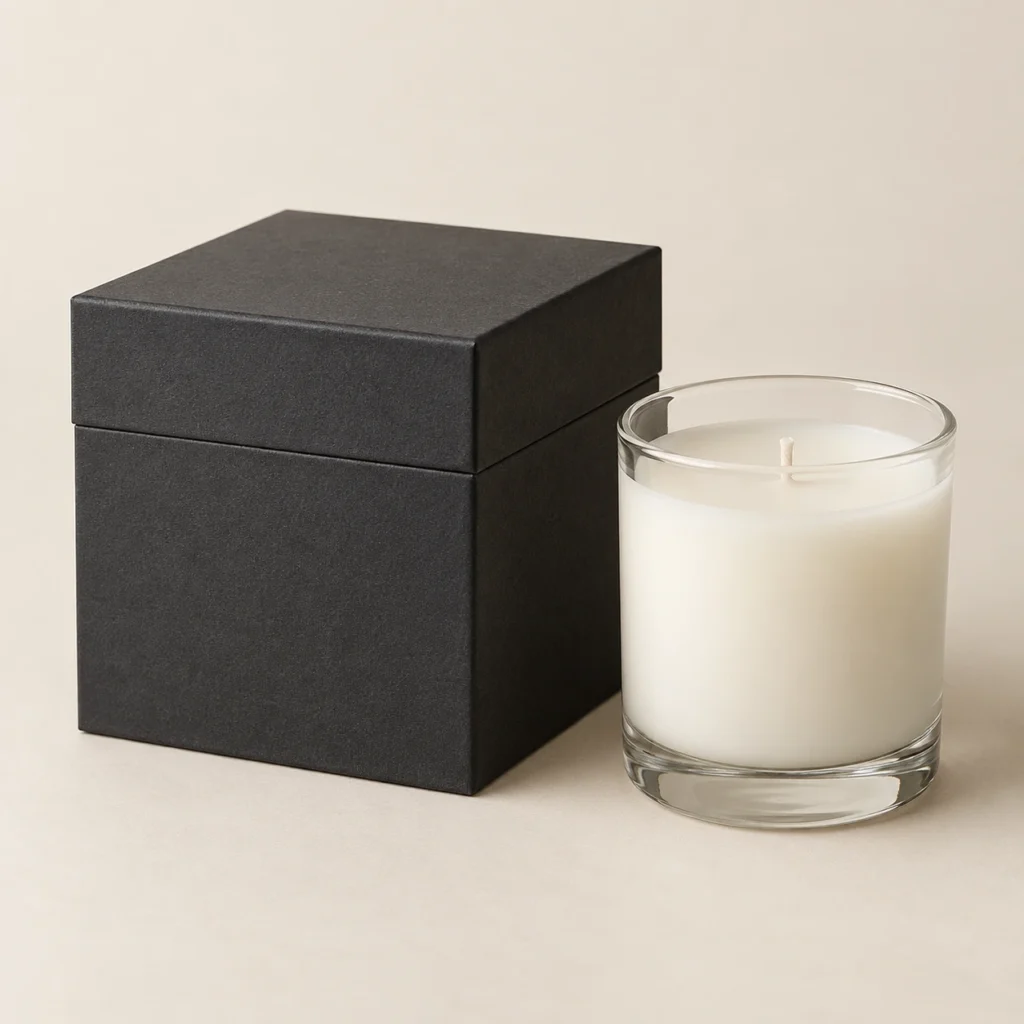
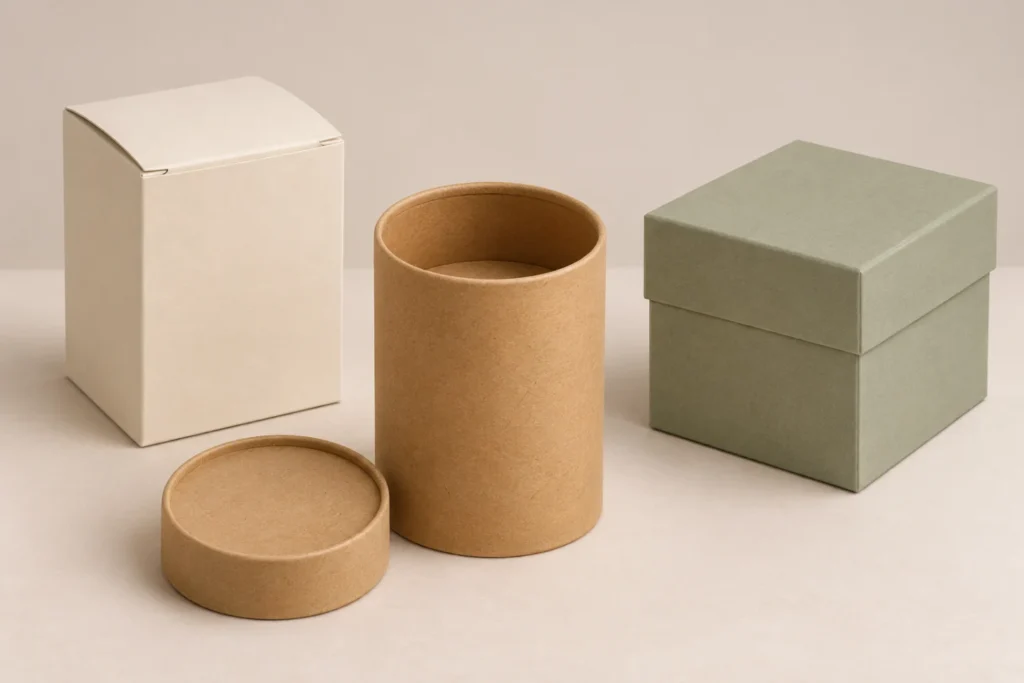
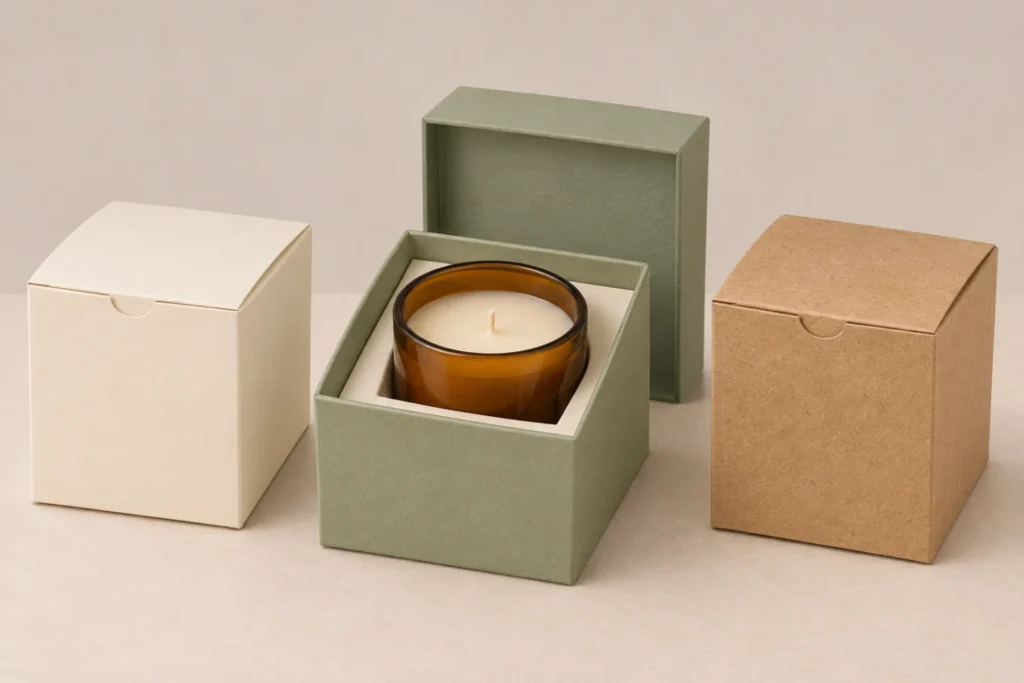
The product visuals in this article are AI-generated design concepts, while the structural drawings are illustrative schematics. None are photographs of LUX BOX client projects or approved production samples.
Choose packaging materials for candles by the job each component performs. A paperboard carton can carry the retail graphics; a wrapped greyboard box can provide a formed presentation; a corrugated pack can be designed to handle distribution. The insert is its own decision. Its shape and support need to work with the filled candle, the box, and how both will be handled.
Begin with the actual product, including the lid, label, and any accessories. Record the maximum outer dimensions, filled weight, and whether the box needs to reach a shelf, be opened as a gift, or travel by parcel. Then compare complete packaging options for that same candle. A material name alone says little about whether a box will fit or protect it.
Compare materials by the layer they serve
Packaging material for candles can refer to a carton board, a rigid core, the print surface, an insert, or the shipping board. A supplier brief should name each part separately. In a folding carton, one board can provide the structure and the visible surface. In a rigid box, the core and the paper you touch are usually two different specifications.
| Material | Typical role in a candle pack | Ask the supplier to show |
|---|---|---|
| Paperboard or cardstock | Printed folding carton, sleeve, or folded insert | Exact board grade and a sample of the base, closure, or insert under the filled candle. |
| Kraft paper or kraft paperboard | Wrap or band; carton stock if specified as board | Whether the kraft is the visible layer or the structure, and how the artwork prints on it. |
| Greyboard | Core of a wrapped rigid presentation box | Core grade and thickness, how it is wrapped, and the usable interior after lining. |
| Corrugated board | Outer shipper, partition, supporting pad, or some retail formats | The combined board, box design, and conditions used to review the loaded pack. |
| Specialty paper | Decorative wrap, liner, or visible panel | What the finish looks like on the selected stock, including at a fold or a wrapped corner. |
Paperboard and cardstock for folding cartons
Use paperboard and cardstock as a starting point when the buyer needs a printed retail carton or a folded insert. Specify the board grade, intended coating or printing face, and thickness, also called caliper. Basis weight describes mass for a given area; two stocks of similar basis weight can have different calipers and stiffness. Neither metric, taken alone, establishes what the assembled box can carry.
Check the bottom and fold lines with the filled vessel in place. A board can print well but still need a different crease or closure for the proposed construction. For an insert made from folded board, check where it contacts the jar, how it sits against the carton base, and whether the candle can be removed cleanly.
Kraft: decide whether it is the surface or the structure
When comparing kraft candle box materials, specify whether you want thin kraft paper as a wrap or band, kraft paperboard as the carton stock, or a kraft liner on corrugated board. These components do different jobs. Natural brown color is a visual choice; it is not a strength rating or proof of recycled content.
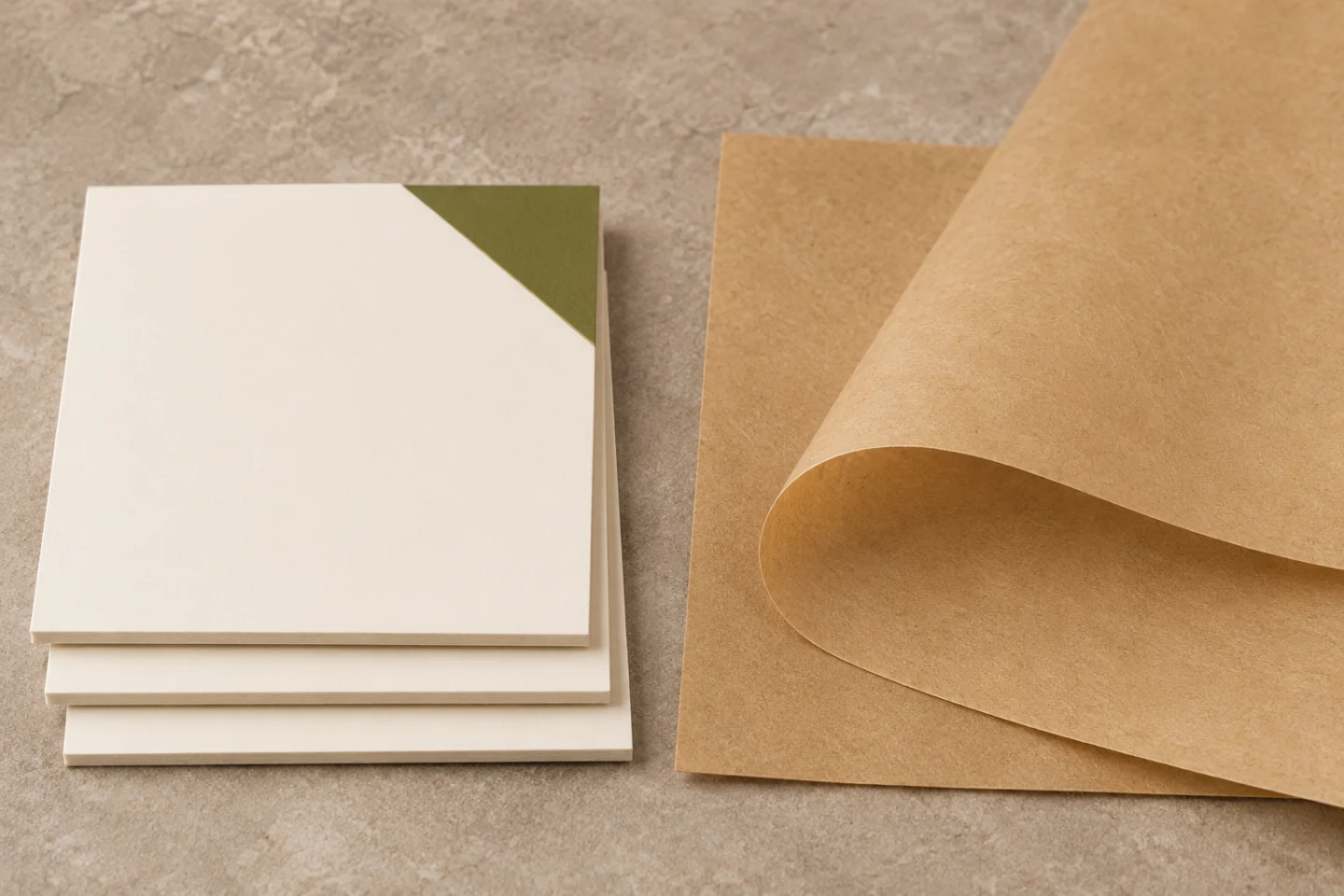
Check candle packaging paper on the side you intend to print. A brown surface can change the appearance of pale colors or fine detail compared with white stock. Print a representative mark and the smallest important text before approving the design. If an opaque white layer is needed, ask the printer whether it is feasible on the proposed stock and how it changes the quote.
Greyboard for a wrapped rigid box
Greyboard can serve as the core of a lift-off or hinged presentation box. Specify the core, outside wrap, inside liner, and insert separately. Match the core and construction to the way the filled box will be handled instead of choosing a thickness from the candle’s advertised wax weight. Two candles with the same wax weight can use very different vessels.
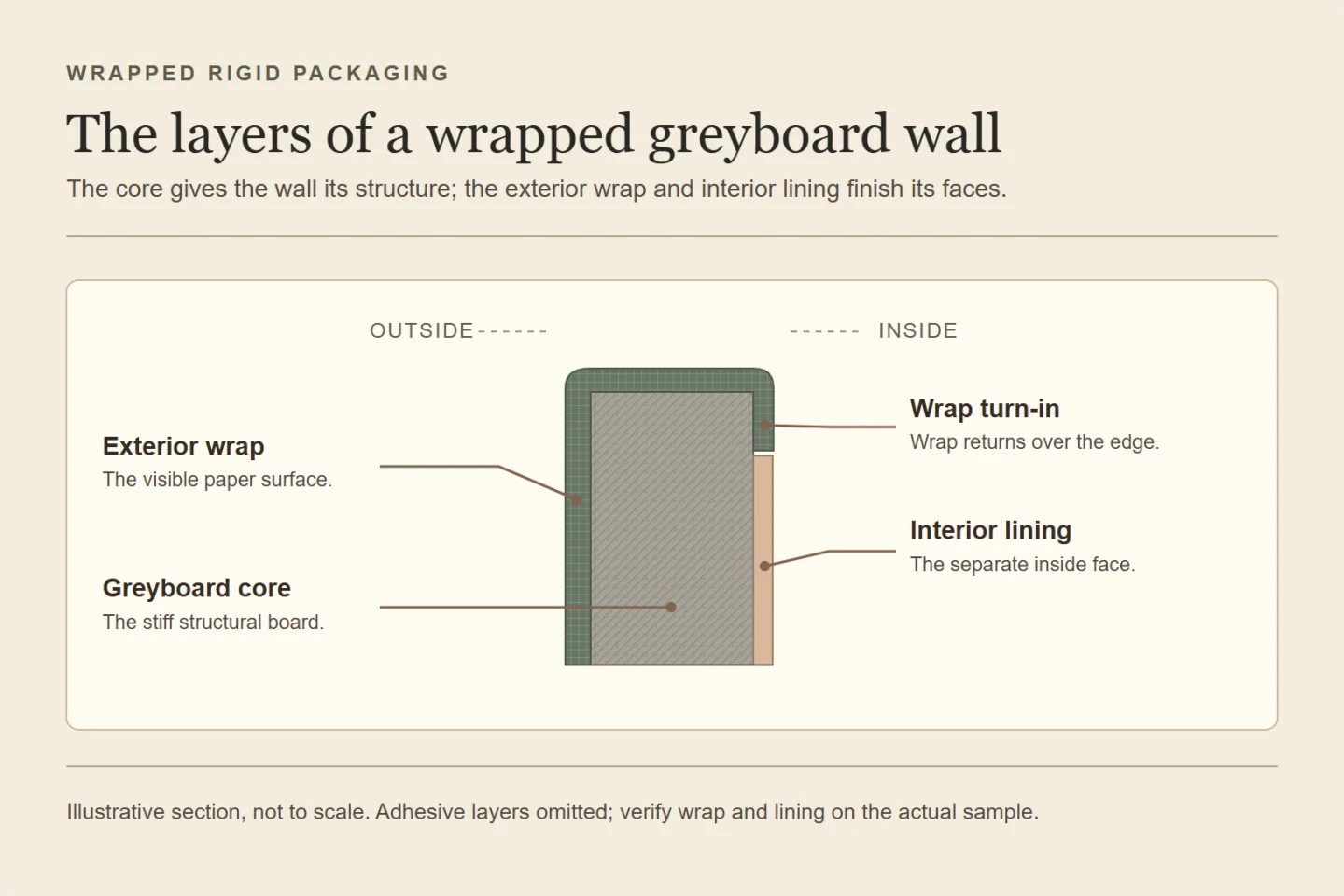
Review the lid fit, corners, base, and inside height after wrapping and lining. A thicker core may change the usable space if the outside dimensions are held fixed. If the box arrives formed, include its storage and incoming freight requirements in the comparison; confirm how your supplier will deliver the chosen design.
Corrugated board for the shipping pack and selected retail boxes
Standard single-wall corrugated board has a fluted middle layer between two flat liners. The flute profile is one specification, not a complete description of board strength. Ask for the combined board construction and proposed box design together. Depending on the project, the board might form an outer carton, a divider between several retail boxes, or the support that keeps a vessel away from another surface.
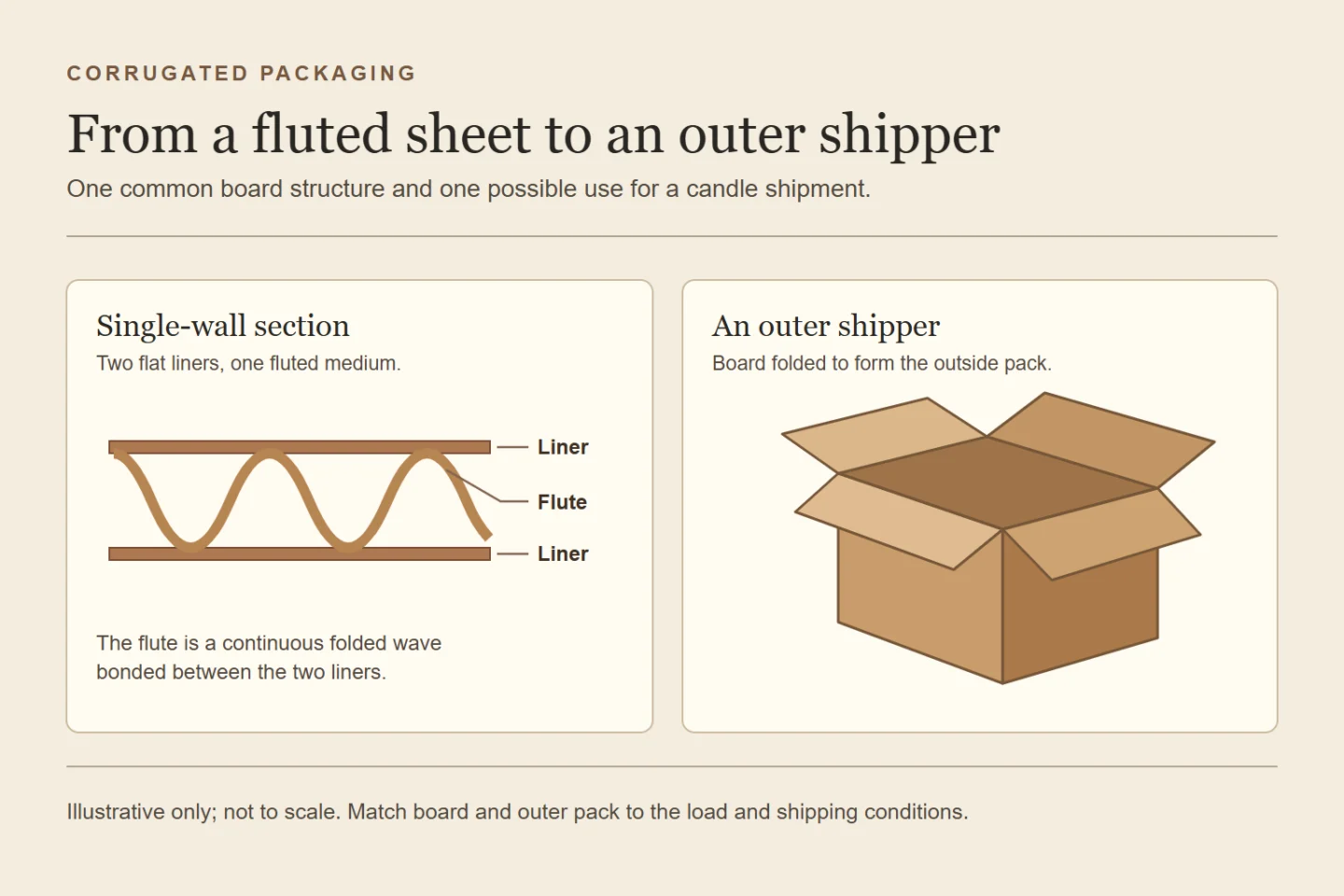
A small-flute corrugated structure can also be considered when the retail box needs a different feel or shape from a folding carton. Check the visible edges, print face, inside clearances, and opening with a sample. For parcel delivery, assess the filled candle, supports, and complete shipping pack for the actual route; a flute name does not establish transport performance.
Specialty papers: approve the actual finish
A textured, colored, or specialty paper can change how a rigid box feels or how its artwork reads. Choose it for the visible role first, and check whether it is intended as a wrap, a liner, or part of the folding structure. A decorative wrap does not replace a structural core. Request samples with the actual fold or corner treatment and review foil, embossing, or printed detail at the size it will appear.
Compare rigid vs folding candle boxes for the same product
For one filled jar, consider three layouts: a paperboard carton with a folded support for retail, a wrapped rigid lid-and-base box for a gift, and a corrugated shipper that can carry the selected retail box. The carton and rigid format can be alternatives for presentation. The shipper is a separate choice unless the complete design is intended and checked for both display and transport.
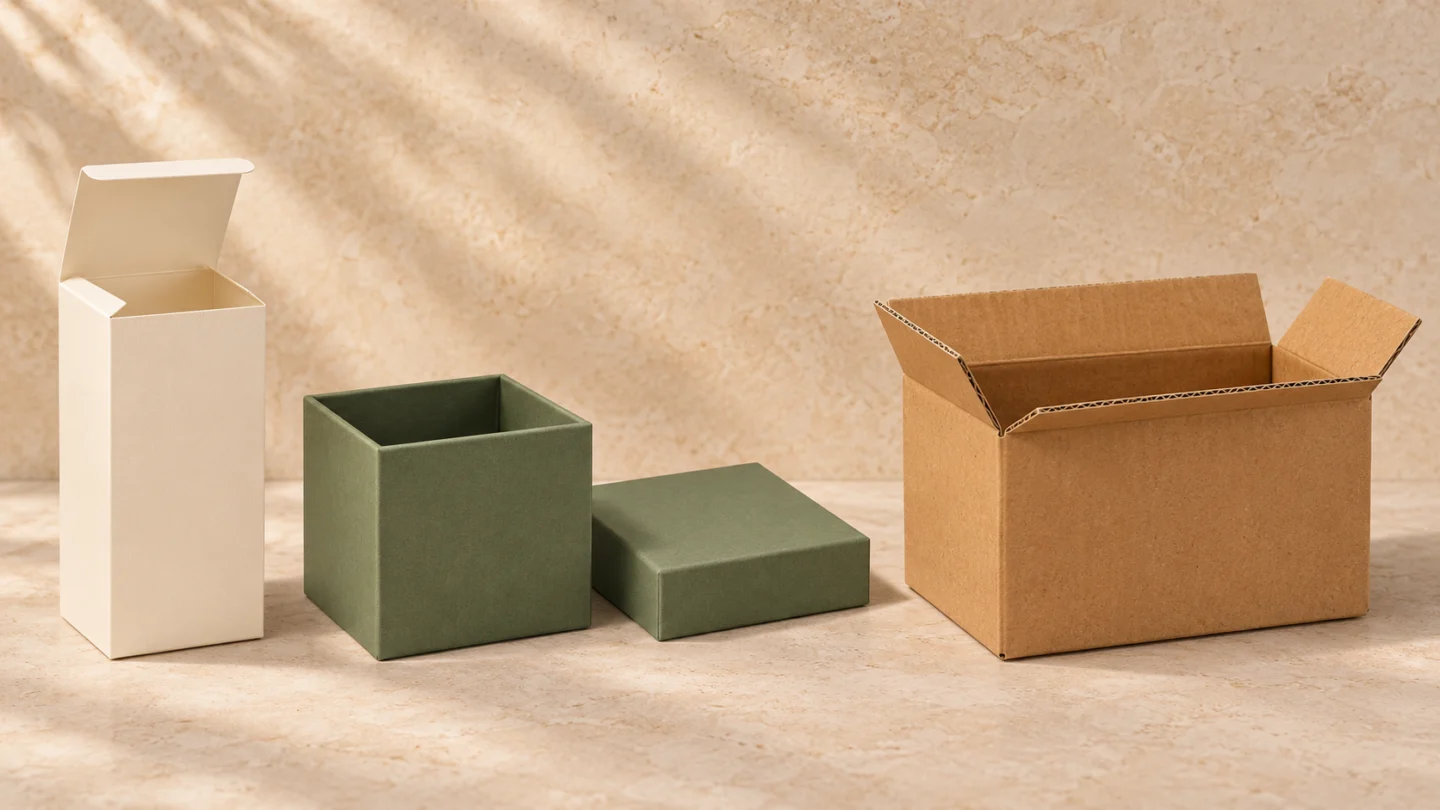
For comparable quotes, give each supplier the same filled candle, design scope, and target quantities. Confirm what is included: board grade, liner, insert, printing, decoration, assembly, and whether boxes arrive flat or formed. Compare packing time, carton dimensions, and freight alongside the unit price. A cheaper unassembled box can involve more packing work; an attractive wrapped box may still need an outer shipper.
A checklist for a material specification
- Describe the load. Share a filled sample or dimensions and weight, including any lid, label, or accessory.
- Name each layer. Separate visible stock, structural board, liner, insert, and shipping materials.
- Set the approval steps. Use a loaded structural sample for fit and access, then agree what the print proof or finished sample represents. Follow the candle box packaging design guide when checking dimensions and the structural drawing.
- Check substitutions. Ask to review any change in grade, thickness, coating, liner, or approved paper before production. If an environmental claim is part of the brief, consult the sustainable candle packaging guide for that separate evidence review.
Frequently asked questions
What is the best material for candle packaging?
There is no single material for every part of the pack. Start with folding paperboard for a printed retail carton, a wrapped board core for a formed gift box, or corrugated board for a shipper. Confirm the proposed board, insert, and closure with the actual filled product before making a production decision.
When should candle brands use greyboard?
Consider greyboard when the brief calls for a wrapped rigid box with a formed base, lid, or hinge. Select the greyboard and wrap separately, and verify fit after lining and assembly. The carton and shipping pack still need to be evaluated for how the product will be handled.
Is corrugated board suitable for retail candle boxes?
Yes, when its visible edges, print surface, opening, and interior meet the retail brief. Use a physical design sample to compare it with a folding carton. If it also serves as a shipper, evaluate the complete pack for the intended distribution route before assuming it can do both jobs.
Put the material choice into a brief
Compare structures in the Candle Packaging collection, then contact LUX BOX with the filled product dimensions and weight, intended channel, box quantity, and preferred print surface. Identifying which materials carry the load and which carry the design gives the supplier a better starting point for a quote and sample.