Sustainable Candle Packaging Materials and Options
A buyer's guide to paperboard, kraft, rigid boxes and packaging finishes, with practical checks for material composition, recycling routes and supported environmental claims.
Paper Candle Packaging Design Concepts
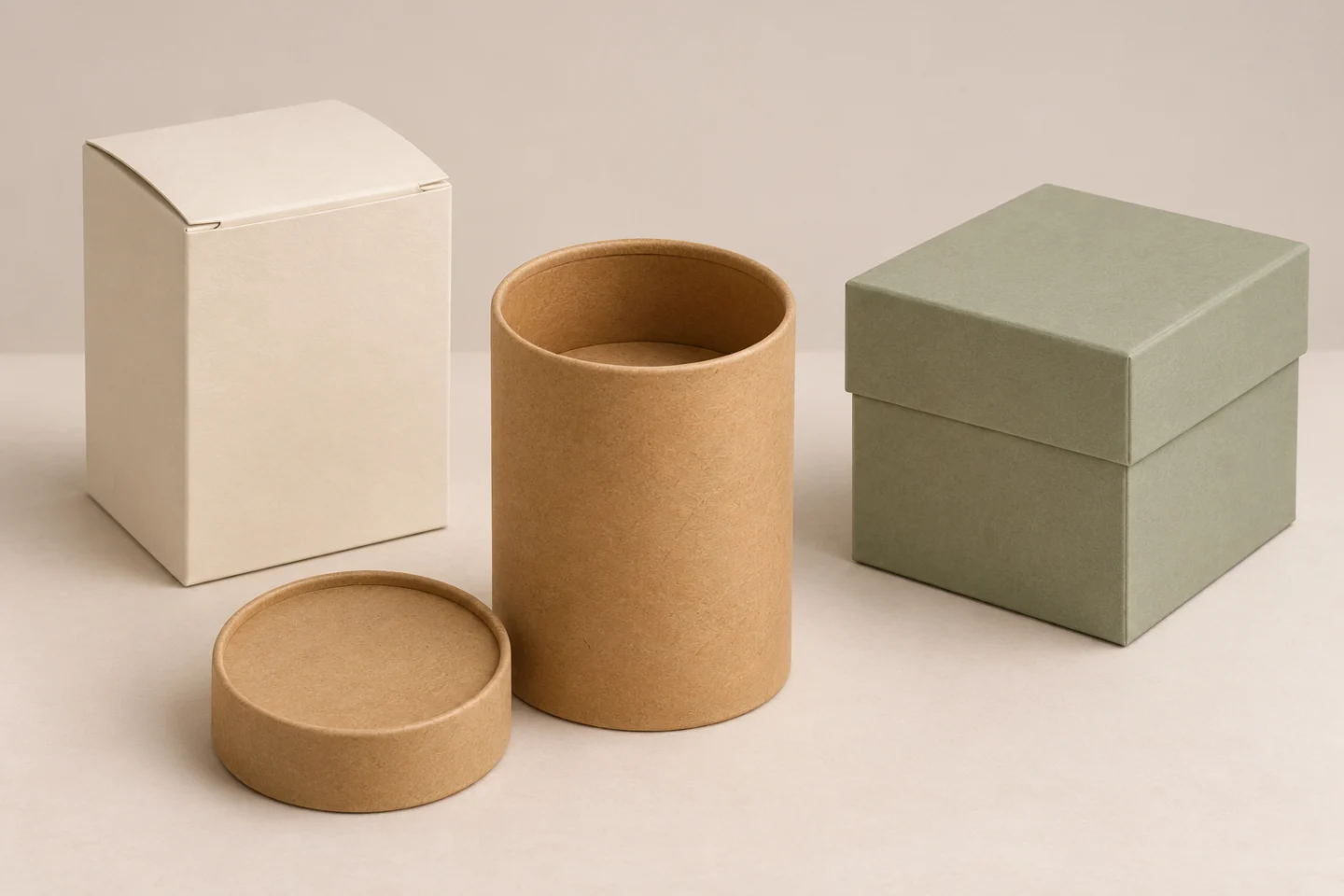
Design Concept Notice
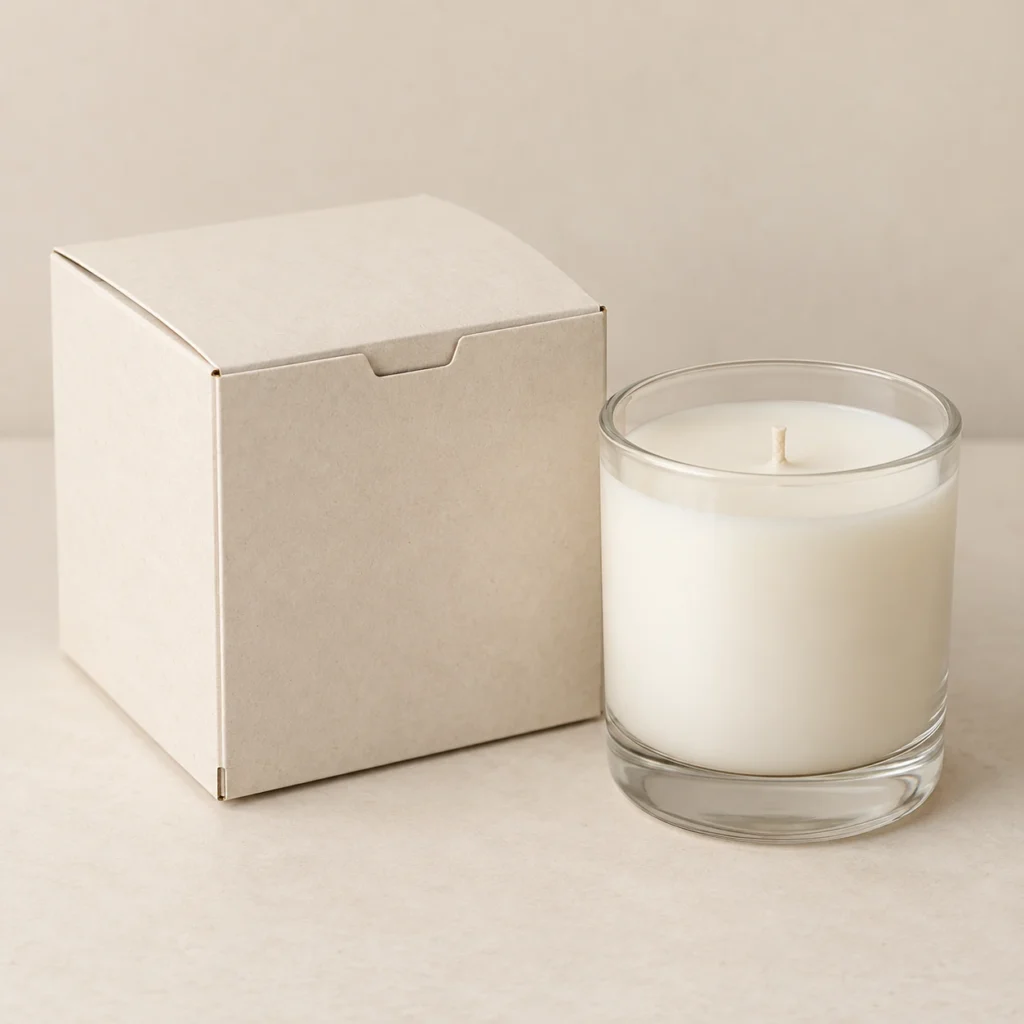
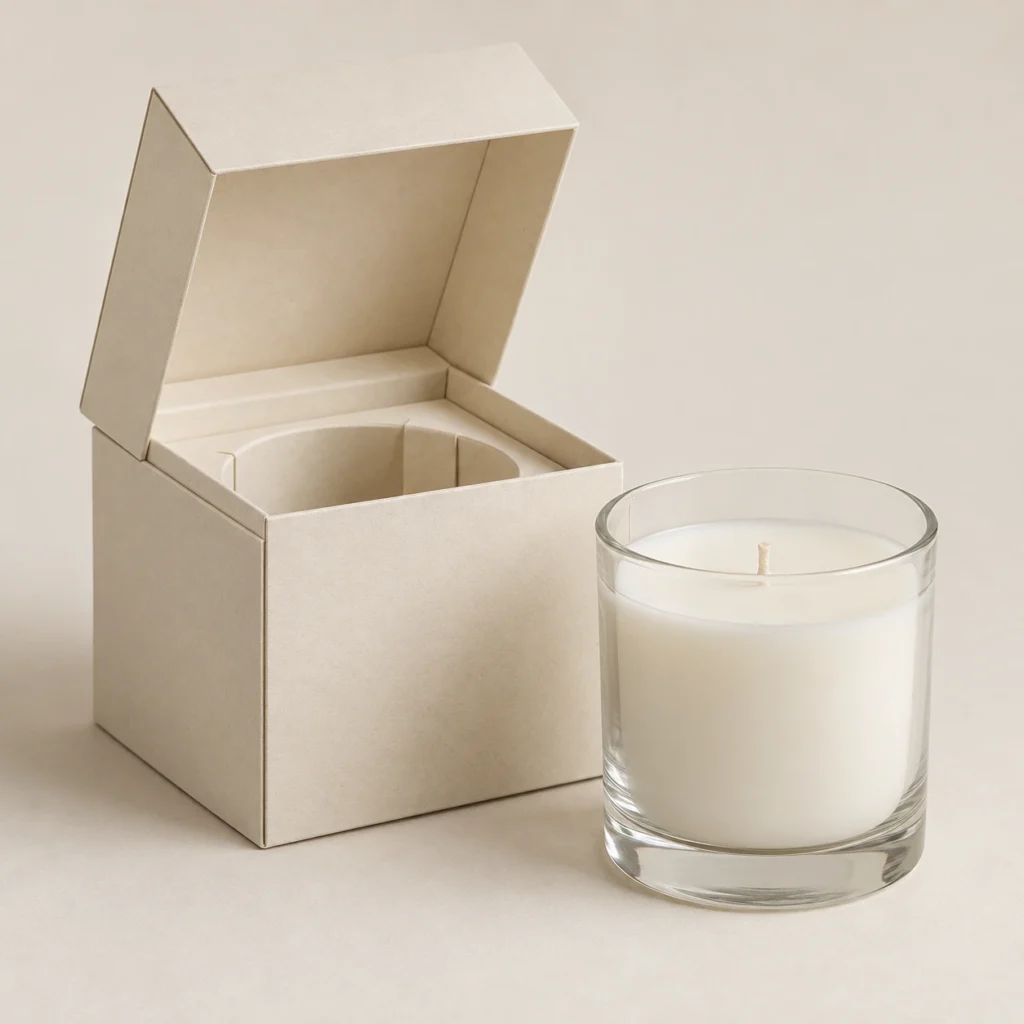
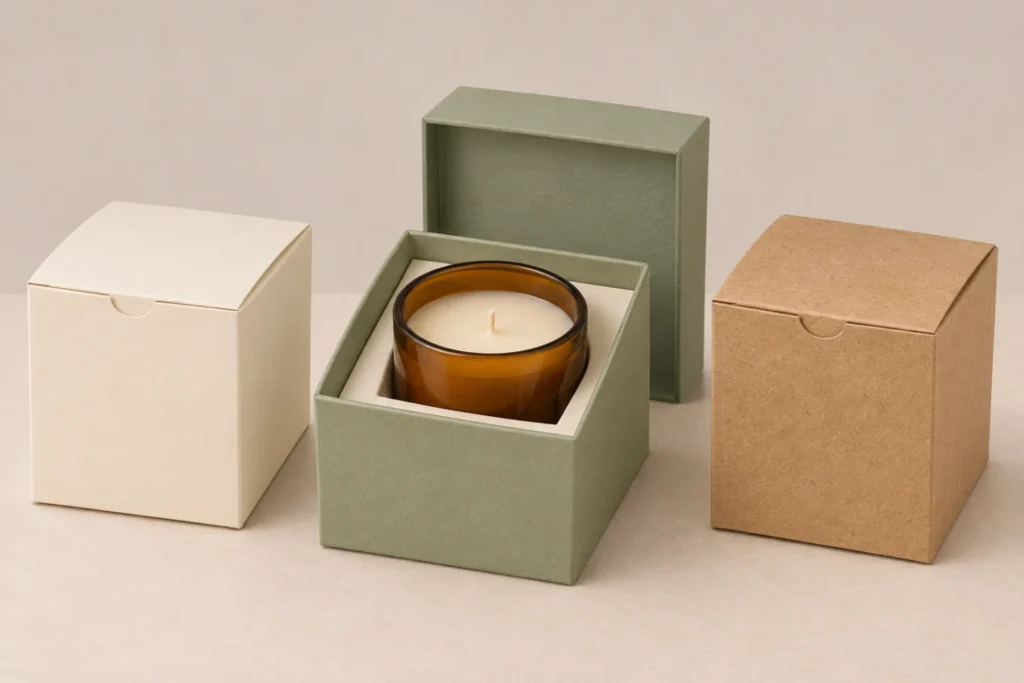
The product visuals in this article are AI-generated design concepts. None are photographs of LUX BOX client projects or approved production samples.
Brands researching eco friendly candle packaging should start with a component-by-component specification and the recycling routes available in their intended market. Review the paper, coatings, adhesives, inserts and accessories as a finished pack. Support public claims with evidence for that construction instead of relying on a material name or a natural-looking color.
For candle buyers, the decision connects presentation, product protection, material use and transport. A lighter box or a paper-based appearance alone cannot establish the overall environmental result. Compare options against the same filled candle and delivery requirements, and identify what still needs confirmation.
Distinguish materials from environmental claims
Planning sustainable packaging for candles includes the retail box, insert and transport packaging. Record their composition, weight, supplied format and purpose before selecting an environmental description.
| Description | What it tells a buyer | What still needs evidence |
|---|---|---|
| Recycled paper | The paper contains recovered fiber | Verified content and whether the finished pack has a recycling route |
| Recyclable paper packaging | A proposed end-of-life route | Compatibility of the complete construction and access to collection, sorting and processing |
| FSC-certified paper | A sourcing or chain-of-custody claim within a defined scope | Valid documentation, the relevant product and order, and any permitted label use |
| Kraft paper | A paper type or visual material direction | Fiber composition, treatments and the proposed finished construction |
| Coated paper | A surface treatment has been applied | Coating identity, amount and compatibility with subsequent processing |
| Laminated paper | A separate layer has been bonded to paper | Layer and adhesive composition, separation and recycling assessment |
These descriptions are not interchangeable. FTC guidance on environmental claims cautions against broad, unqualified environmental claims. Use a specific attribute with appropriate support and qualifications.
An FSC claim also needs its own evidence. Review the supplier’s certificate, scope and transaction documents against FSC chain-of-custody guidance. Certification of a paper source does not establish local recyclability of the finished candle box.
Specify paperboard cartons for the retail task
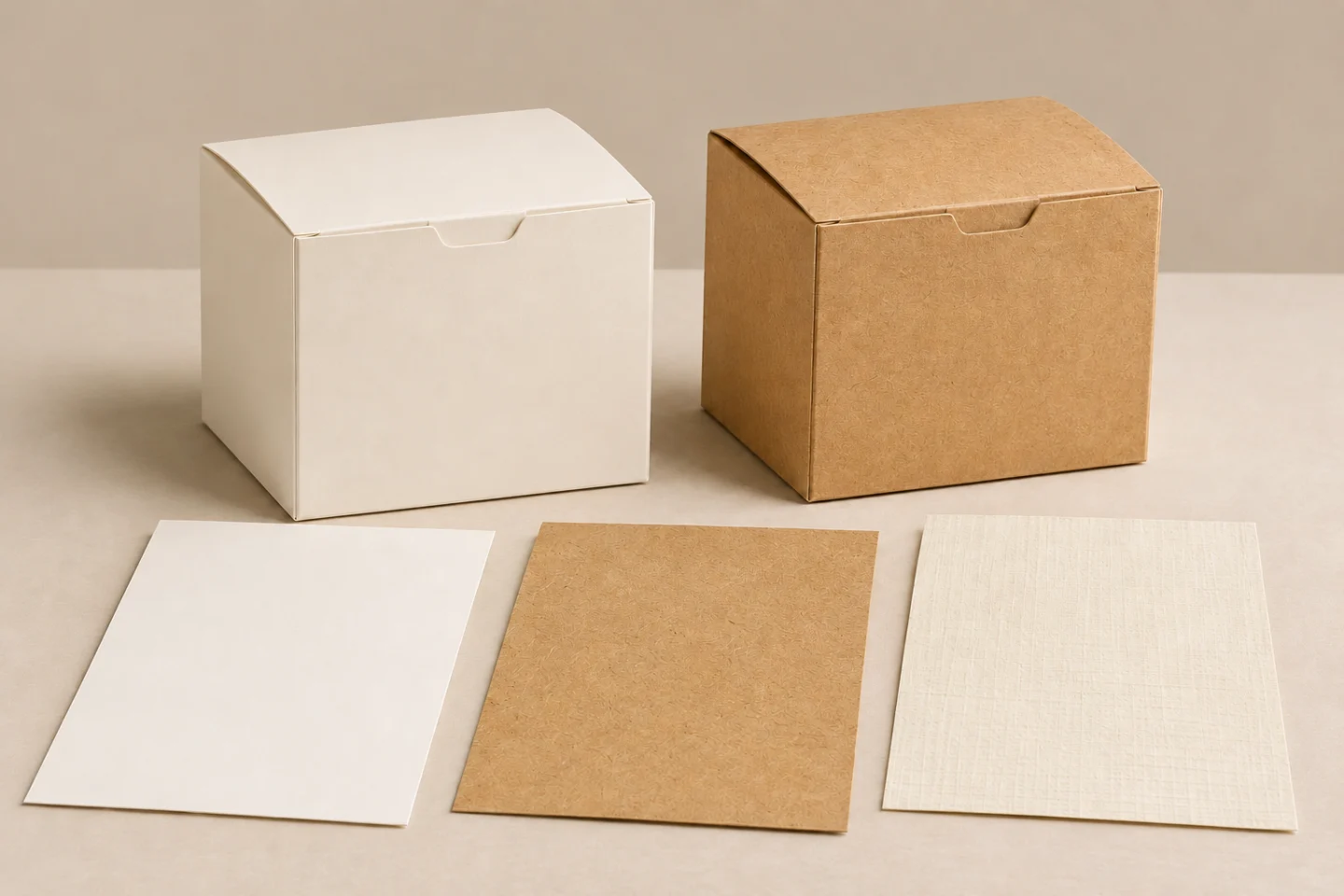
Paperboard or cardstock can form printed folding cartons around individual candles. Define the actual board, dimensions and closure, then review how the carton works with the filled vessel and any insert. Consider display, packing work and material use together.
Cardboard candle packaging is a broad description. Ask whether the proposal is a folding carton, a wrapped rigid box or a corrugated construction before comparing quotations or environmental information.
A restrained carton can offer space for scent identification and product information without adding a second decorative layer. Confirm the proposed ink, coating and adhesive system; a paper substrate alone does not describe the complete package.
Use kraft for its appearance and a documented construction
Kraft can support a natural, understated visual direction in folding cartons, wraps and gift-box designs. Ask whether the quoted paper forms the structure, lines another board or wraps a rigid core.
An uncoated option may suit the intended appearance, but brown color does not prove recycled content, responsible sourcing or a viable recycling route. Check the paper specification and any additional layers or components.
Explore kraft paper packaging options to discuss formats. Treat that visual selection separately from substantiating a material or environmental claim.
Review rigid boxes as a complete assembly
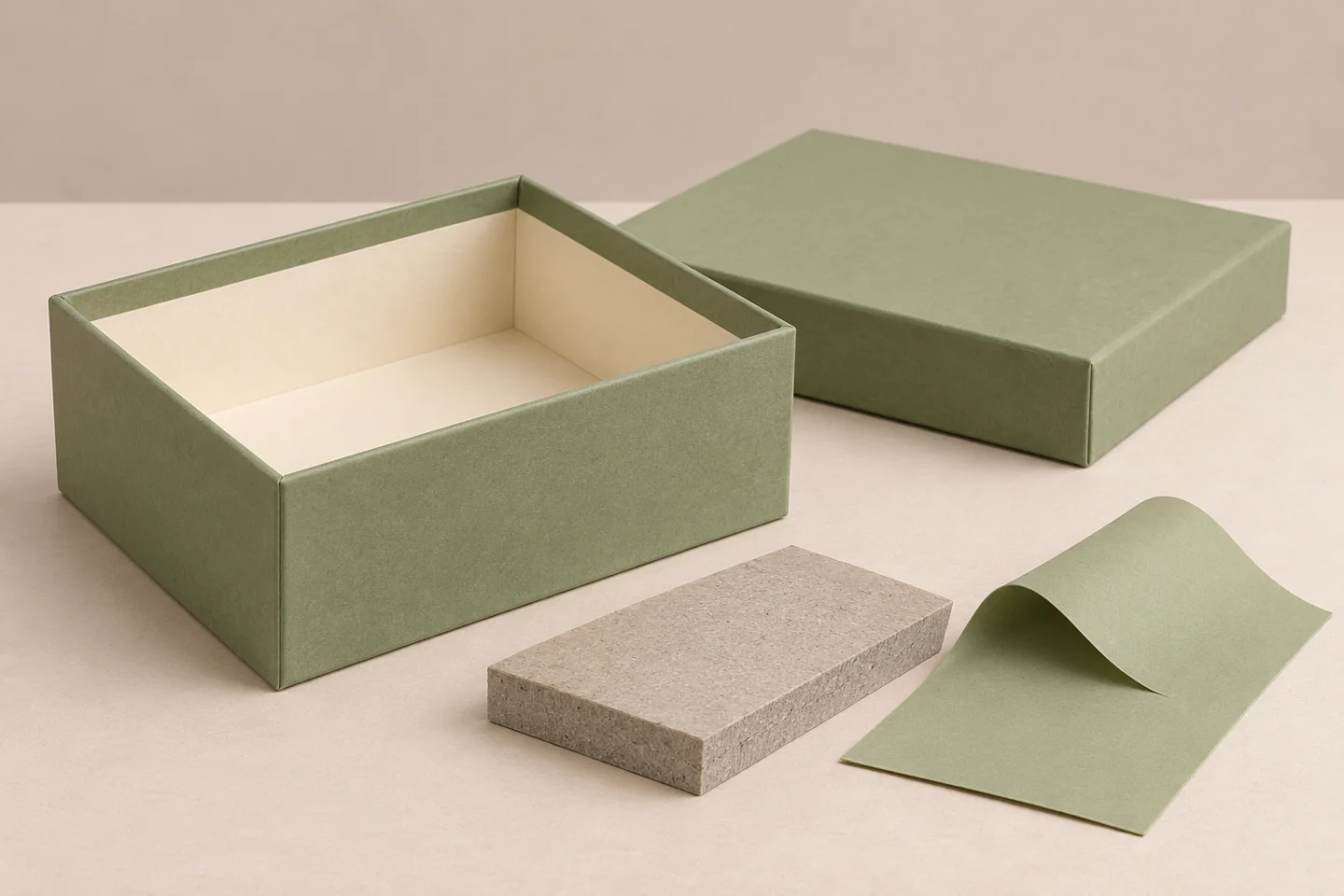
A rigid candle box may combine greyboard, wrapping paper, lining, adhesive and an insert. Magnetic formats can introduce additional closure components. Request these as separate entries in the material specification, including wrapped specialty paper rather than describing the entire assembly as simply cardboard.
A lid-and-base design can suggest a second use as a storage box. That is a design intention, not evidence that recipients will reuse it or that it has a lower overall impact. Assess the materials and structure for the actual application without assuming rigid packaging is environmentally preferable to a folding carton.
Compare added presentation value with material quantity, assembly and delivered volume. A simpler opening or fewer decorative components may be worth sampling.
Balance corrugated protection with material use
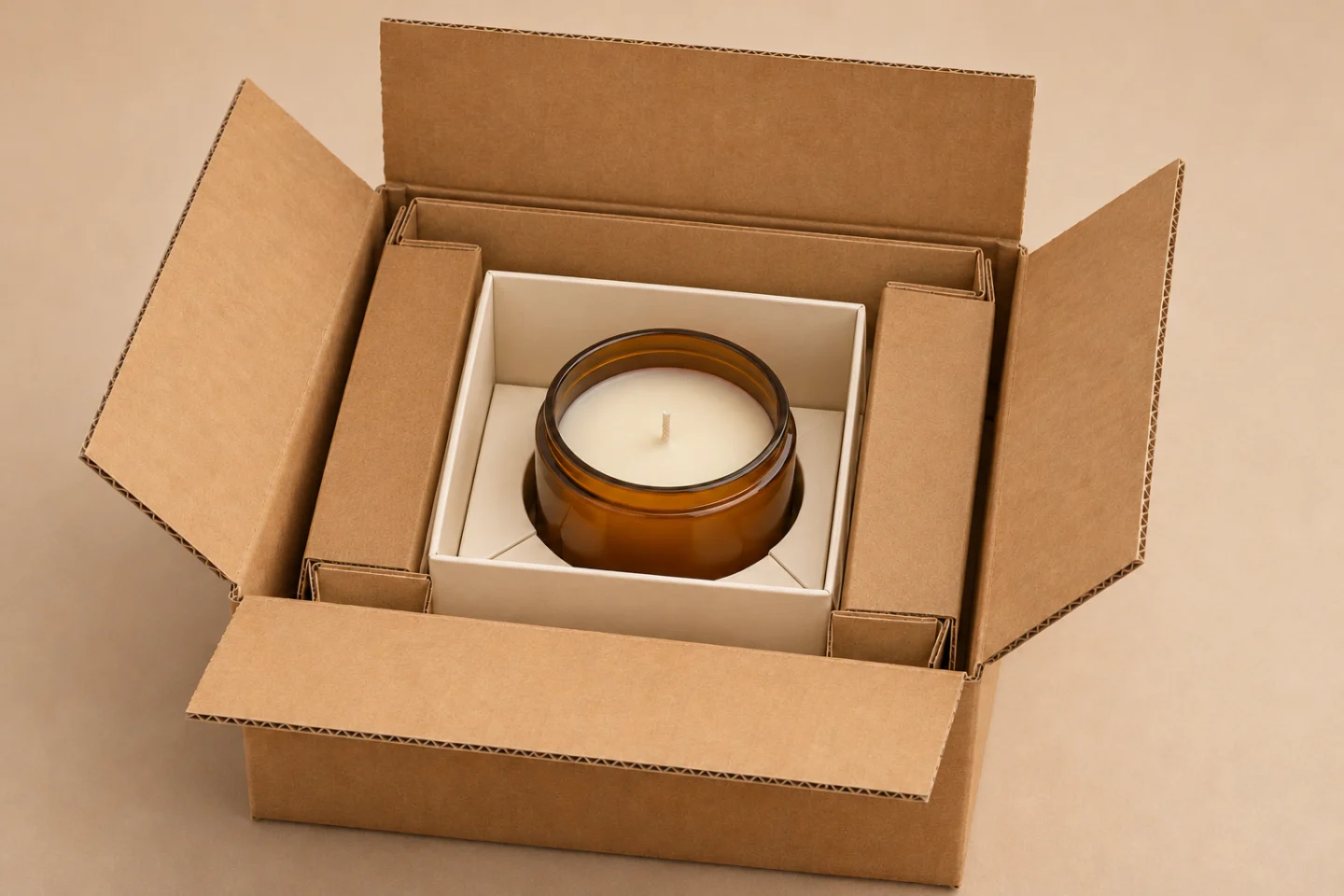
Corrugated board can form outer cartons, partitions and supporting inserts. Specify their roles and the packed configuration, especially for fragile glass candle jars. Removing material without checking protection can undermine the packaging task.
Review empty space, unit arrangement and support between products. Record packed weight, carton dimensions and the number of candles per outer carton so alternatives can be assessed on a consistent basis.
Our candle shipping guide covers fit and transport evaluation. A paper-based insert or a smaller shipper is not automatically a validated protective system; evaluate the complete pack for its route.
Identify finishes before assessing recycling compatibility
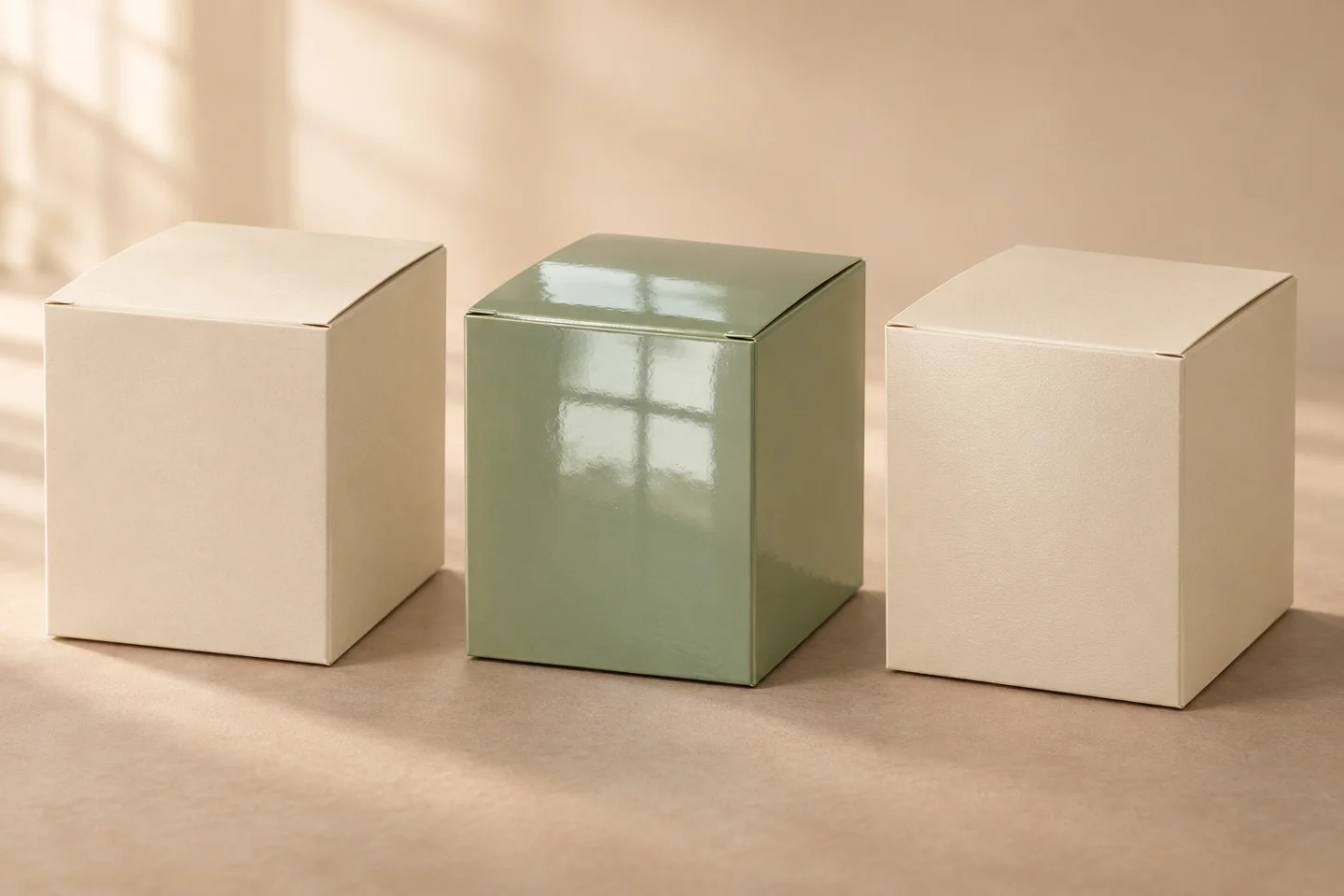
Appearance does not establish the chemistry or recycling behavior of a finish. Matte, gloss and soft-touch descriptions need a material specification. Distinguish a film bonded to the sheet from an applied coating and from transferred decoration.
| Finish | Appearance or construction to discuss | Procurement checks |
|---|---|---|
| Matte lamination | A low-gloss laminated surface | Film type, adhesive, coverage and the finished-pack assessment |
| Gloss lamination | A reflective laminated surface | The same composition questions; gloss is not a recycling classification |
| Soft-touch lamination | A tactile film finish | Confirm the actual film system; touch does not establish composition |
| Aqueous coating | A water-based coating system | Identify the dried coating and additives; water-based does not prove plastic-free |
| UV coating | A UV-cured coating system | Confirm formulation, application and compatibility with the proposed recycling route |
| Foil stamping | Transferred decorative elements | Foil system, coverage, residues and supporting assessment; distinguish it from a full foil laminate |
Ink, adhesive and decorative components also belong in the review. Do not classify every example of one process as universally recyclable or non-recyclable. The actual composition, application and available processing route matter.
For visual choices, see our luxury candle packaging design guide. Select the effect first, then request evidence for the specific proposed construction.
Build a component-to-evidence purchasing brief
An eco candle packaging brief should identify the destination market and each component’s function. Ask the supplier to name every candle packaging material, including coatings, wraps, adhesives, insert materials and closure parts.
Work through four questions:
- What is supplied?
Obtain material references, composition information and the current drawing or assembly specification. - What is being claimed?
Separate recycled content, certified sourcing, recycling compatibility and any reduction claim. - What supports it?
Request documents or relevant testing for the actual material combination. Confirm scope, method, version and whether the evidence covers the finished construction. - Where will it go?
Check the collection, sorting and processing arrangements available in the intended market, including any required component separation.
Laboratory measurements, such as those described in Cepi’s recyclability test method, support technical assessment under defined conditions. They do not establish that every destination collects or processes the pack. Likewise, a material supplier’s document may leave added printing, film or accessories outside its scope.
Agree how specification changes will be reviewed. Replacing a paper, adhesive or finish can change the basis of an earlier assessment. For launch budgets and order planning, use our small-business packaging guide.
Reduce unnecessary components without losing function
Check whether the box is oversized, whether separate decorative layers serve a purpose and whether one folded insert can perform the required positioning task. Keep the filled vessel, lid and accessories in the review.
Consider the supplied format and shipping-carton layout alongside the retail design. Compare material amounts and packed volume using the same product and distribution assumptions; do not turn a design change into a percentage saving without measurements and a defined baseline.
Sample the proposed assembly before approval. A design concept can explain an arrangement, but it cannot establish material composition, recycling compatibility or transport performance.
Frequently asked questions
What materials make candle packaging more sustainable?
Evaluate suitable paperboard, kraft, greyboard-based structures and corrugated components against the required function. Review their documented composition, quantity, added finishes and available end-of-life route. A material name alone cannot rank the completed options.
Can paper candle boxes be recyclable?
They can, where the complete construction is compatible with an available recycling system. Verify coatings, inserts, adhesives and accessories as well as the paper, and check collection and separation requirements in the intended market.
How do coatings affect candle box recyclability?
They change the material combination presented to the recycling process. Ask about the specific coating or laminate and relevant evaluation. Neither a water-based description nor a matte appearance establishes the result for every facility.
Is Kraft paper suitable for premium candle packaging?
It can support a restrained premium design when the grade, print and structure suit the product. Approve the appearance through samples and substantiate any environmental description separately; brown paper is not certification evidence.
Can luxury candle packaging also use recyclable paper materials?
Yes, but selecting a recyclable base paper does not establish the status of the assembled luxury pack. Review wraps, closures, lining and inserts, and verify the applicable system before making a finished-pack claim.
Choose options with a clear evidence trail
To evaluate eco friendly packaging for candles, connect material choices with their functions, supplier documents and destination-market requirements. Compare LUX BOX candle packaging options using a specification that keeps presentation, protection and environmental claims distinct.
Contact LUX BOX with your candle dimensions, material requirements and destination market to discuss your project.