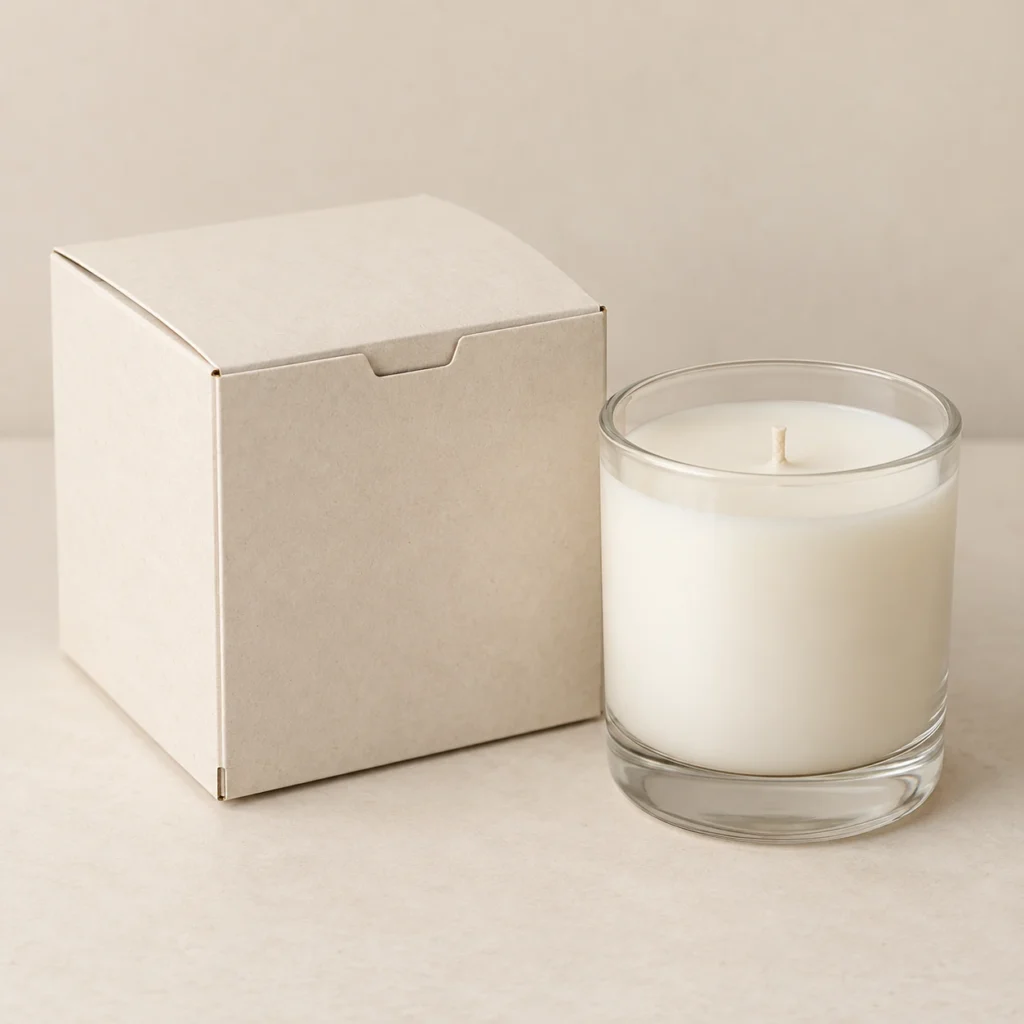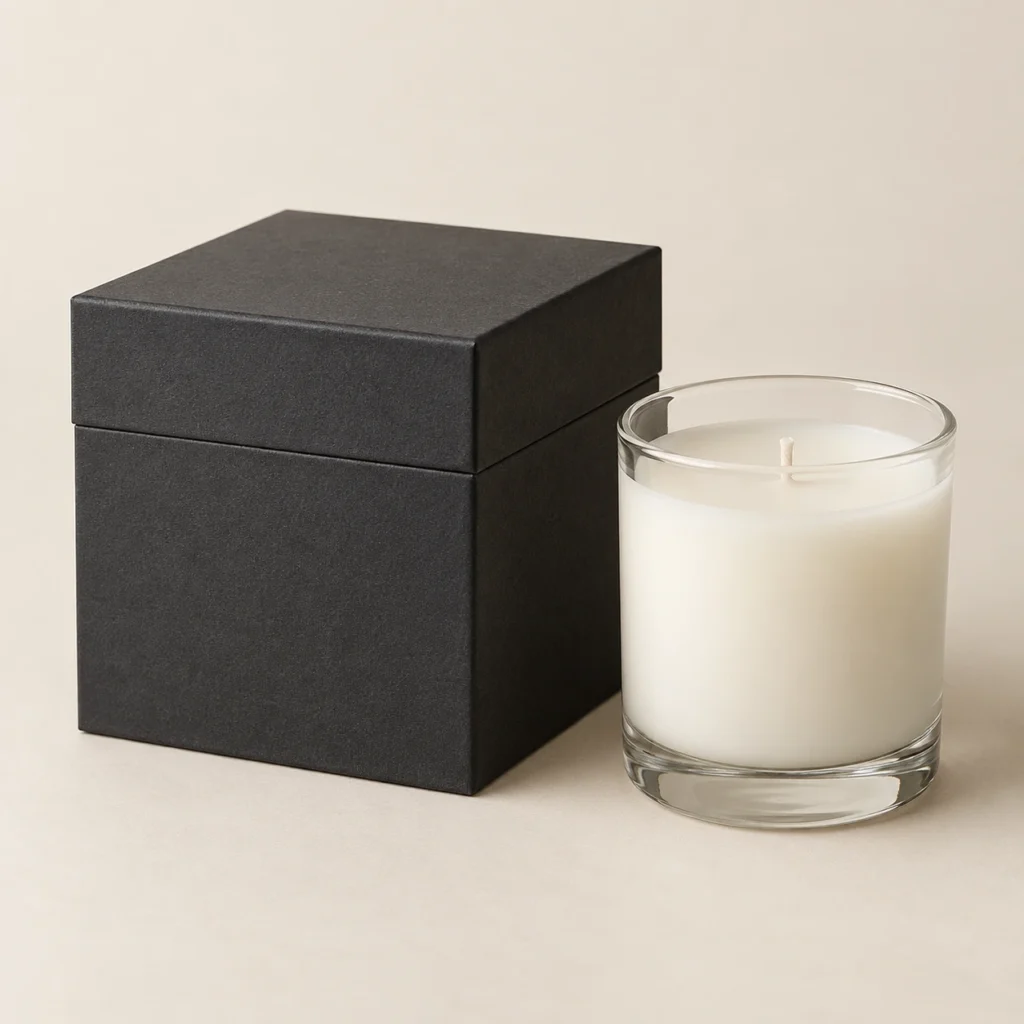
Small Business Candle Packaging Ideas
A purchasing guide to candle box structures, materials, finishing, MOQ and sampling for small brands planning their first order and reorders.
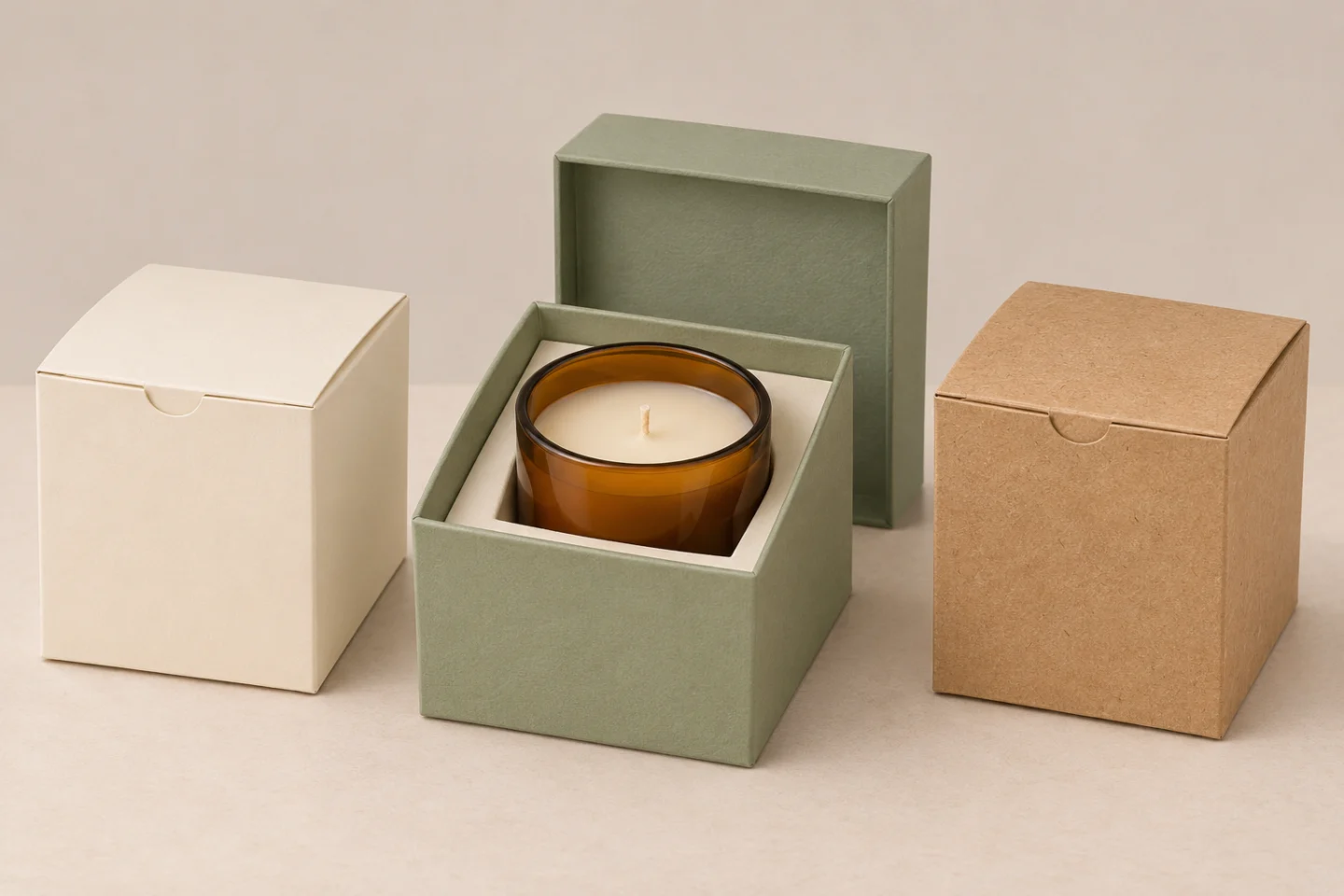
Small Candle Brand Packaging Design Concepts
Design Concept Notice
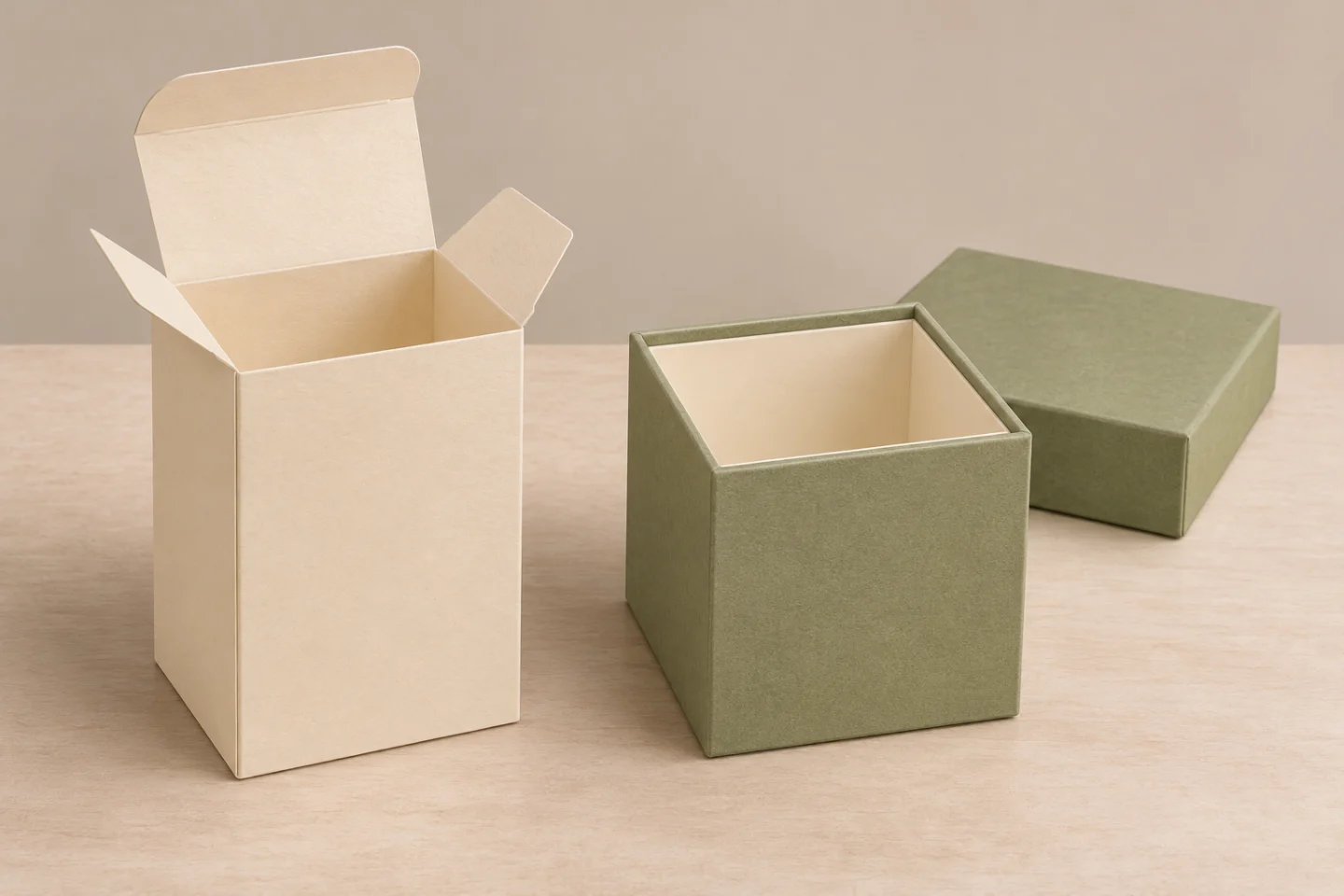
The product visuals in this article are AI-generated design concepts. None are photographs of LUX BOX client projects or approved production samples.
The most useful small business candle packaging ideas start with a repeatable retail box, a clear brand identity and a first order you can realistically use. Choose the structure around your filled candle, then compare materials, decoration and inserts against the same budget. Approve what matters through samples before committing to production.
For a growing brand, packaging also affects storage, packing work and future reorders. A distinctive box can be simple. The aim is to make deliberate choices that support the product and remain manageable as the range develops.
Start with the brand and the sales channel
Define who buys the candle, where it is sold and what the box needs to communicate:
- Minimalist brands: consistent proportions, restrained printing and a clear scent hierarchy.
- Premium brands: a considered opening experience and carefully chosen paper or decoration.
- Handmade brands: recognizable artwork and practical space for changing product information.
- Natural or eco-conscious brands: a material appearance supported by specific, verified environmental claims.
- Gift collections: coordinated presentation, with dedicated positions for each item.
Separate the elements that stay consistent from those that change between scents. If you are considering how to package homemade candles for a growing business, define the retail format and packing process before developing several different boxes. Browse our candle packaging ideas guide for visual directions, then narrow them to your launch requirements.
Choose a structure that suits the first product range
What packaging works for a new candle business?
Start by comparing a straightforward folding carton with any presentation format your sales channel genuinely needs. A shared footprint can simplify purchasing when the filled vessels have compatible dimensions. Confirm each product’s fit; matching artwork does not make different jars interchangeable.
| Structure | A useful starting point | What to resolve before ordering |
|---|---|---|
| Folding carton | Everyday retail lines and a consistent family of scents | Vessel support, closure, assembly and supplied format |
| Rigid box | A gift offer where presentation is part of the purchase | Finished box size, storage volume and assembly cost |
| Magnetic closure box | A deliberate hinged opening for a presentation range | Actual construction, closure components and packed fit |
| Drawer box | A tray-and-sleeve opening with a defined reveal | Tray removal, insert retention and clearance after wrapping |
| Paper tube | A cylindrical presentation around a compatible vessel | Usable internal dimensions, lid fit and packing method |
Magnetic and drawer formats are often rigid constructions; they are not separate material categories. Some presentation boxes collapse for delivery, while others arrive formed. Ask about the supplied format rather than estimating storage from the product name.
Match the material to the structure and budget
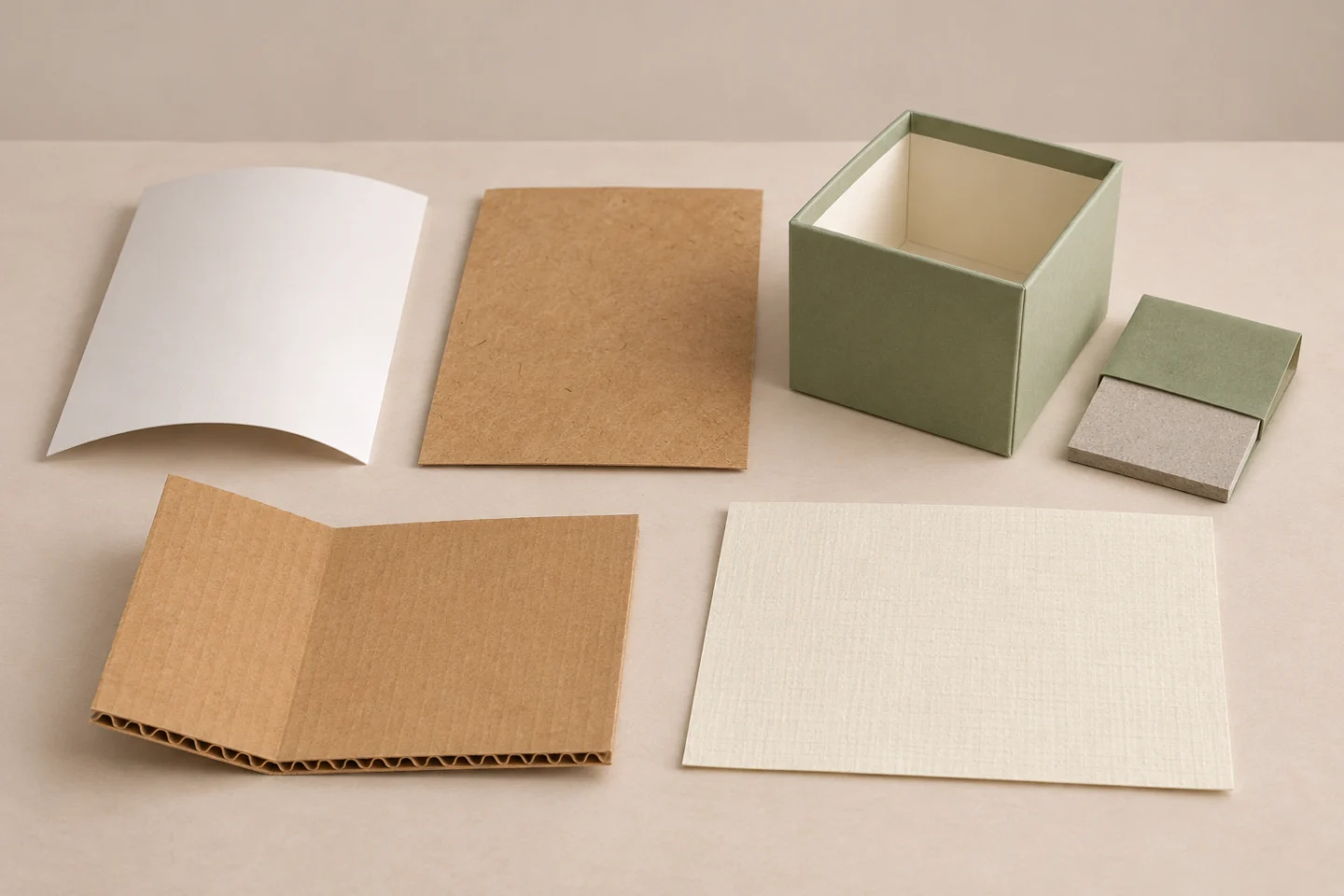
Material selection should follow the agreed box design. Request a named material specification and a physical reference, then compare alternatives on the same basis. Include the structural board, any wrap, printing, finishing and assembly in the finished-box quote.
- Paperboard or cardstock: consider for folding cartons; review stiffness, creasing and the printed surface in the proposed design.
- Kraft paper: provides a brown-paper visual direction. Confirm whether it is a wrap, liner or structural board in the quoted construction.
- Greyboard: commonly forms the core of wrapped rigid boxes, one form of paperboard packaging; the wrapping paper and core have different roles.
- Corrugated board: consider for shipping packs, dividers or a suitable retail format, with the construction specified for its task.
- Specialty paper: introduces texture or a distinctive surface; check availability, printing suitability and wrapping behavior through samples.
Brown color alone does not establish recycled content or recyclability. Verify any environmental statement for the actual materials, coatings and intended market.
Give affordable packaging one clear premium detail
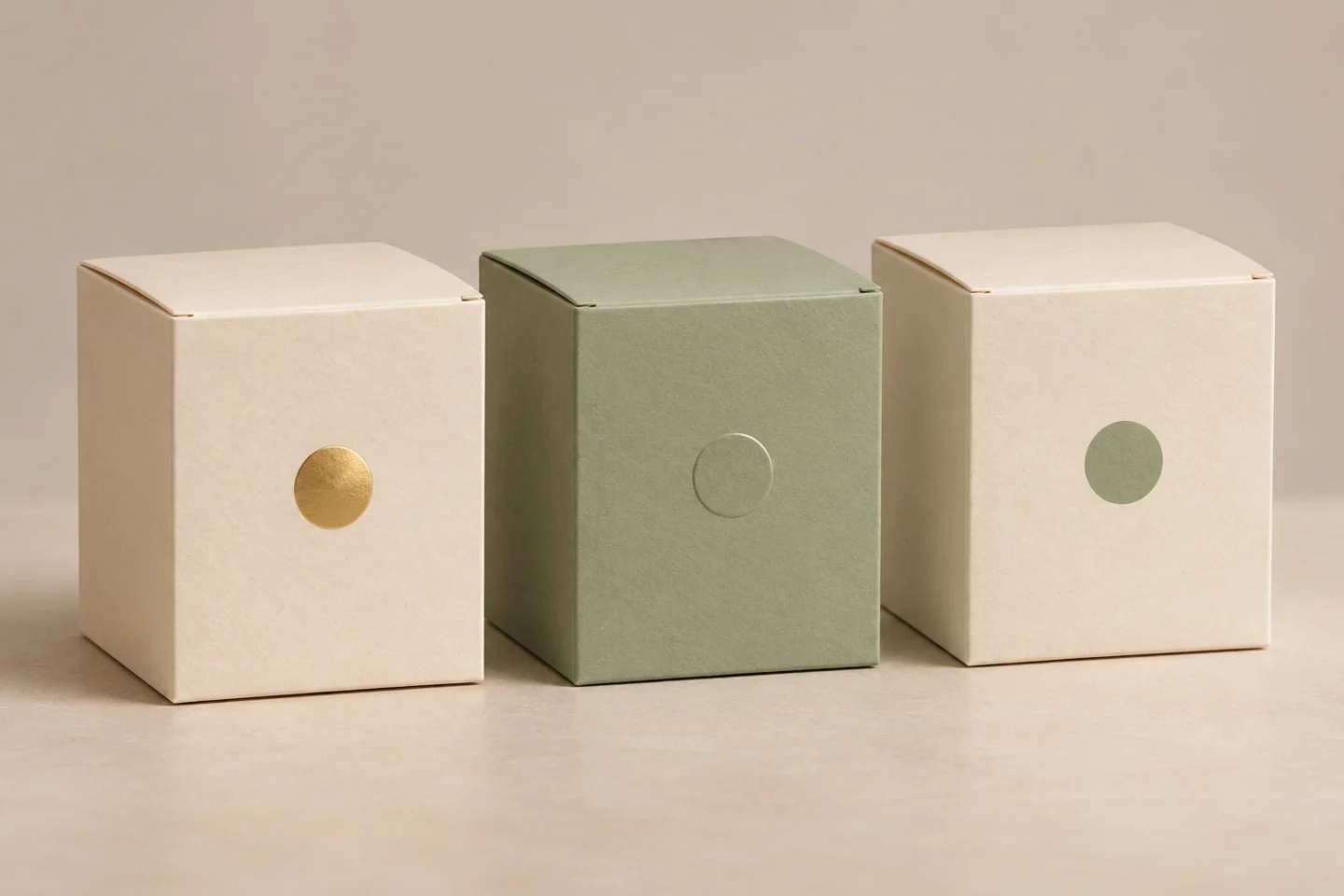
A controlled color palette, readable typography and well-positioned artwork can make small business candle packaging feel coherent. Keep recurring elements consistent, and give scent names enough space to remain legible.
Choose one principal finish, or a second detail with a clear purpose. Selective foil can emphasize a small mark; embossing or debossing can add relief. Matte lamination is another surface option, while a suitable uncoated specialty paper offers a different visual and tactile direction. These choices need separate evaluation rather than automatic combination.
Ask for a base quotation and clearly identified finishing options. Confirm tooling, registration, the proposed substrate and the sample needed to approve the effect. Our luxury candle packaging design guide explores finishes in more detail; use that inspiration within your purchasing limits.
Specify inserts around the filled product
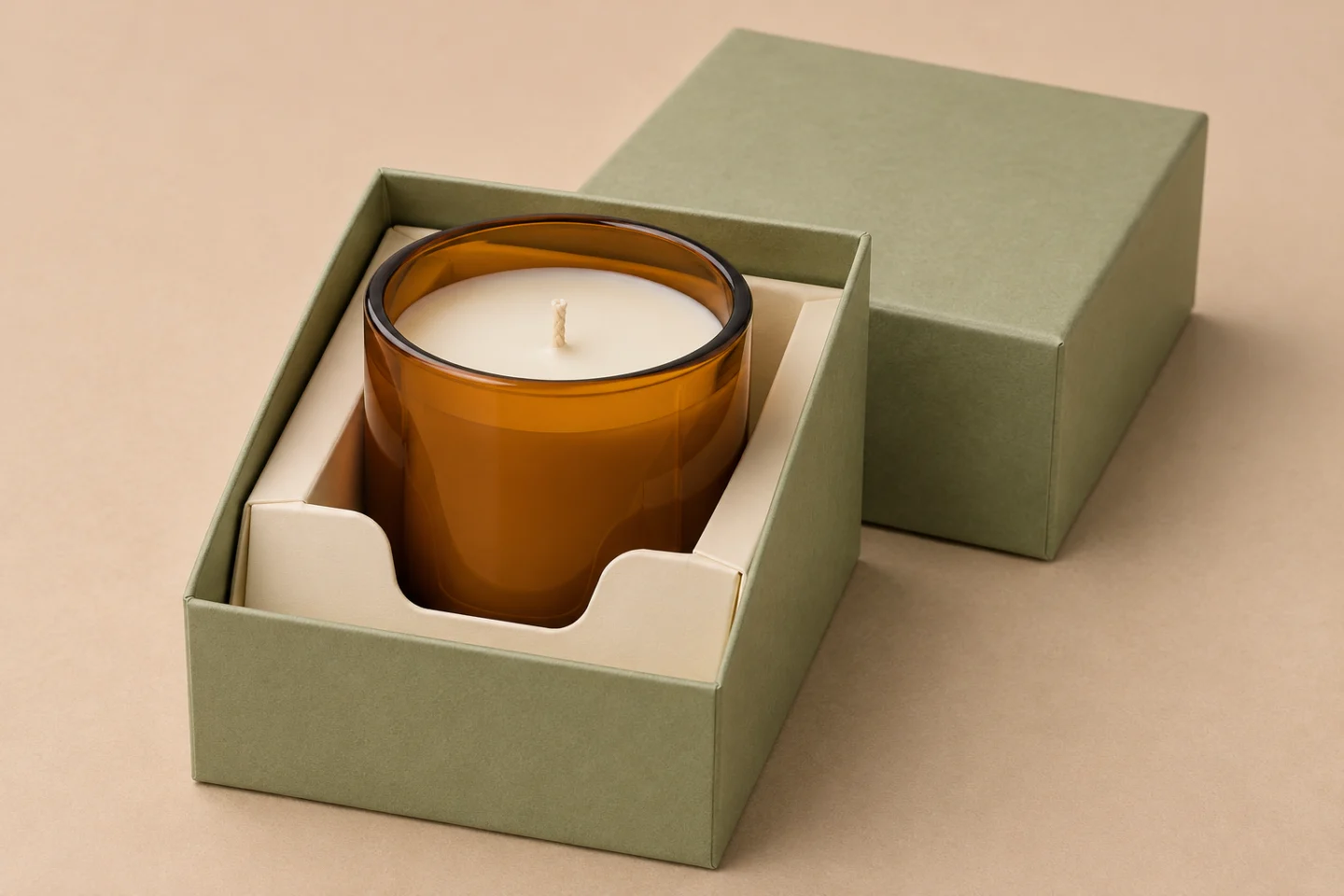
An insert should support the container and allow controlled removal. For glass jars, review contact with the base, sides and lid. For tins, consider movement, lid retention and visible scuffing. Gift sets need separate positions for differently sized candles and accessories.
Paperboard inserts can use folds and locating features; corrugated inserts can form cells or supports. EVA inserts require a proposed grade and geometry matched to the product. Approve the actual construction with filled candles rather than choosing solely from a material name or photograph.
Retail positioning and transit protection are different decisions. See our candle shipping guide when defining the outer carton and transport evaluation.
Plan MOQ and total order cost together
A candle business packaging brief should distinguish quantity per size, per artwork and per order. A combined scent total may not meet the minimum for each separately produced design. Ask the supplier how its minimum order quantity, or MOQ, applies before dividing your launch quantity.
LUX BOX’s current inquiry guidance describes a standard MOQ near 1,000 units, with smaller trial runs subject to review. Confirm the requirement for your chosen specification; this is not a promise of a lower minimum for every design.
Judge cheap candle packaging on total order cost, including setup, materials, printing, finishing, inserts, assembly, freight and storage. Ask which items are one-time charges and which recur. Request quotations with the same dimensions and quantities so a lower unit price is not hiding a different scope.
Plan the first order around realistic sales and usable stock. Where fit allows, discuss a shared structure with scent-specific artwork or labels. Confirm whether this changes setup or MOQ rather than assuming a saving. Leave space for future product information without committing every launch box to a short-lived promotion.
When should a candle startup choose rigid boxes?
Choose them when the gift or retail offer justifies the presentation, and the quote, minimum quantity, storage and packing work fit the launch plan. Consider reserving the format for a gift collection while assessing a simpler carton for the core range.
Give each sample a clear approval task
A white structural sample helps assess dimensions, opening, insert fit and assembly. It does not establish the final printed color or decorative finish.
A printed sample can help review artwork placement, color and the proposed presentation. Ask which parts use the intended production process and which are simulated. A digital print or substitute paper may leave important approval points unresolved.
Review the filled candle, lid and accessories together. Confirm text orientation, folds, barcode placement, paper reference and any finishing sample. Record approved artwork versions and changes. Before production, agree which approved references govern the order and which differences remain; no single sample automatically proves every aspect of the bulk result.
Use a short purchasing checklist
Before requesting or approving a quote:
- Record finished candle dimensions, filled weight and accessories.
- Define brand positioning and retail, gift or online use.
- Select a structure and confirm how it is delivered.
- Identify material, print and finishing requirements.
- Evaluate support, removal and insert assembly.
- State quantities by size and design, plus the budget scope.
- Clarify sample charges, approval tasks and artwork ownership.
- Approve the relevant sample and final artwork before production.
Frequently asked questions
What packaging is best for a small candle business?
Choose around the sales format and filled product. A repeatable folding carton is worth comparing for a core retail range; a presentation box may suit a defined gift offer. Evaluate fit, order cost and packing work together.
How can small candle brands manage packaging MOQ?
Confirm how the minimum applies to each size and design. Compare a shared structure where fit allows, limit unnecessary variants and ask whether a trial run is available. Require written confirmation of its specification, quantity and charges.
Can small candle brands use custom rigid boxes?
Yes, subject to the supplier’s confirmed specification, minimum and quotation. Ask about storage and delivery format as well as the box price. A limited gift range may be a more manageable starting point than changing every product.
How can I make affordable candle packaging look premium?
Prioritize consistent artwork, a considered paper choice and one well-executed detail. Compare a restrained foil or relief option with the unadorned version. Approve the actual effect and check whether it creates extra tooling or assembly requirements.
What information should I provide when requesting a candle packaging quote?
Provide vessel dimensions, filled weight, lid and accessory details, quantity by design, desired structure and visual references. Add insert needs, artwork status, destination and timing. Define whether your budget covers boxes alone or the complete delivered packaging order.
Build a packaging plan you can reorder
The strongest candle packaging ideas for small business connect brand presentation with a usable first order and a clear repeat-order specification. Explore LUX BOX candle packaging options to compare directions for your range.