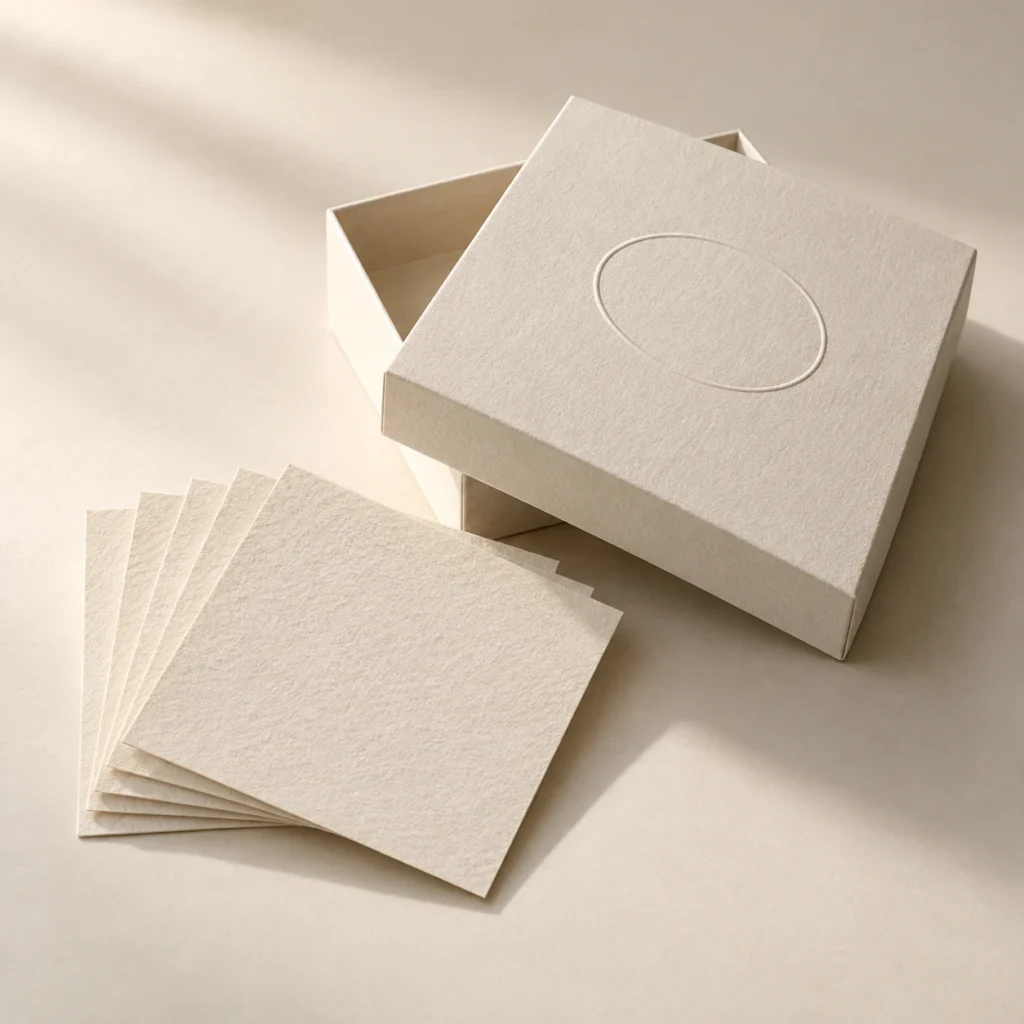
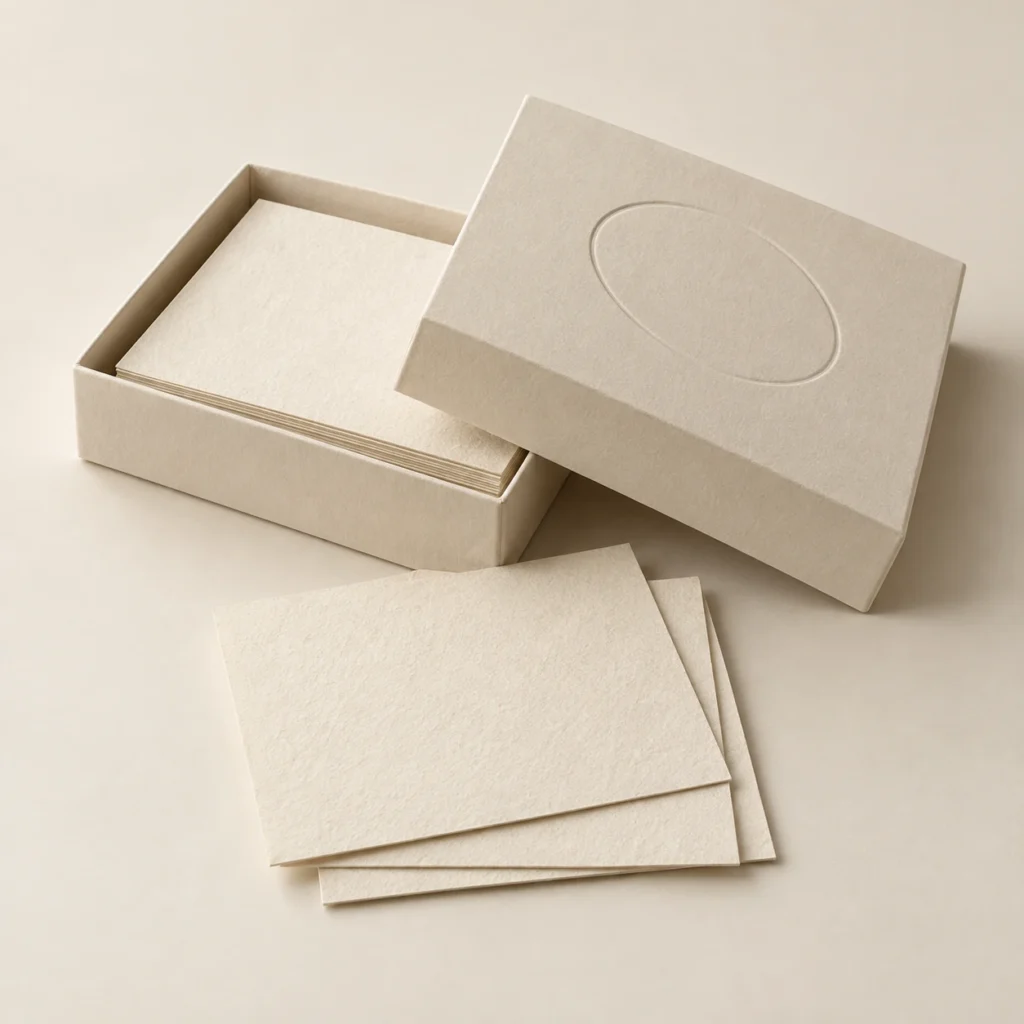
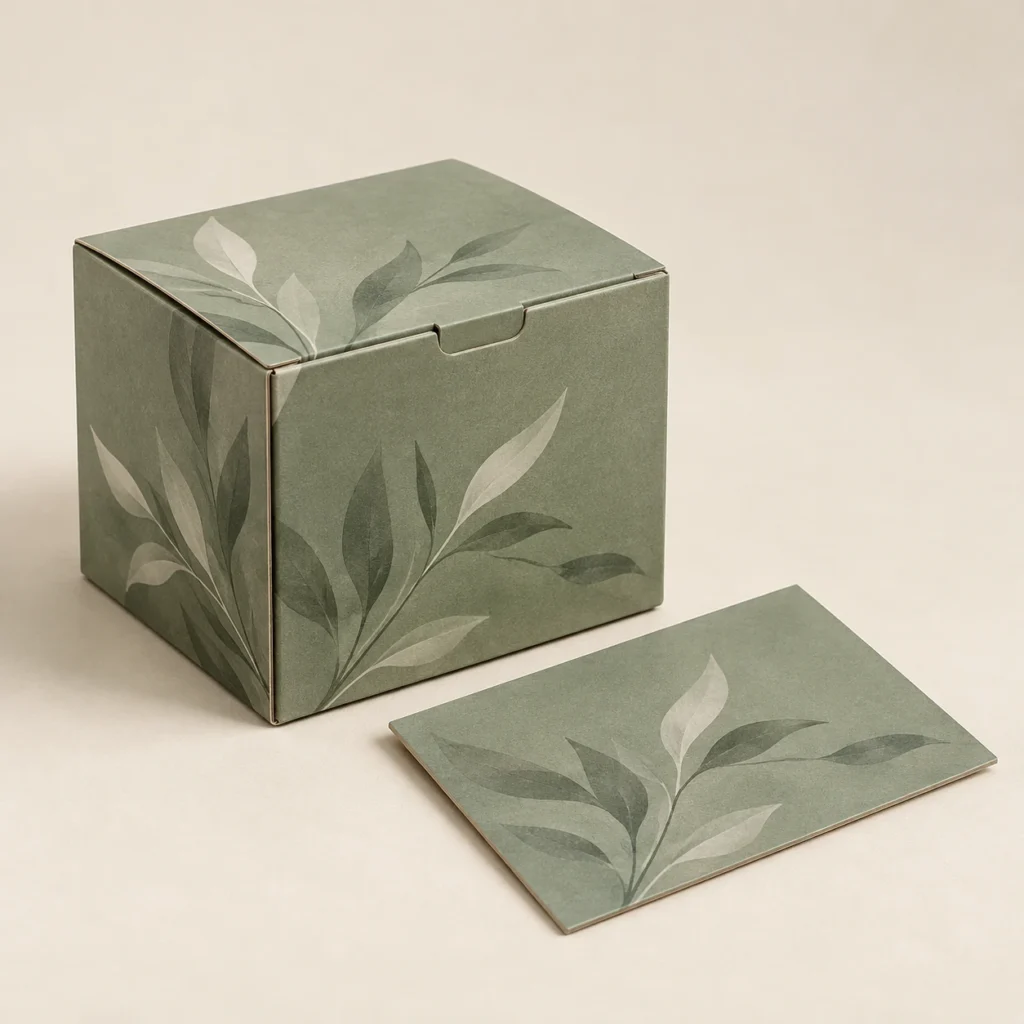
Compare packaging finishes by their visible effect, surface compatibility and handling requirements. A reflective detail, a raised impression and an overall film solve different presentation tasks.
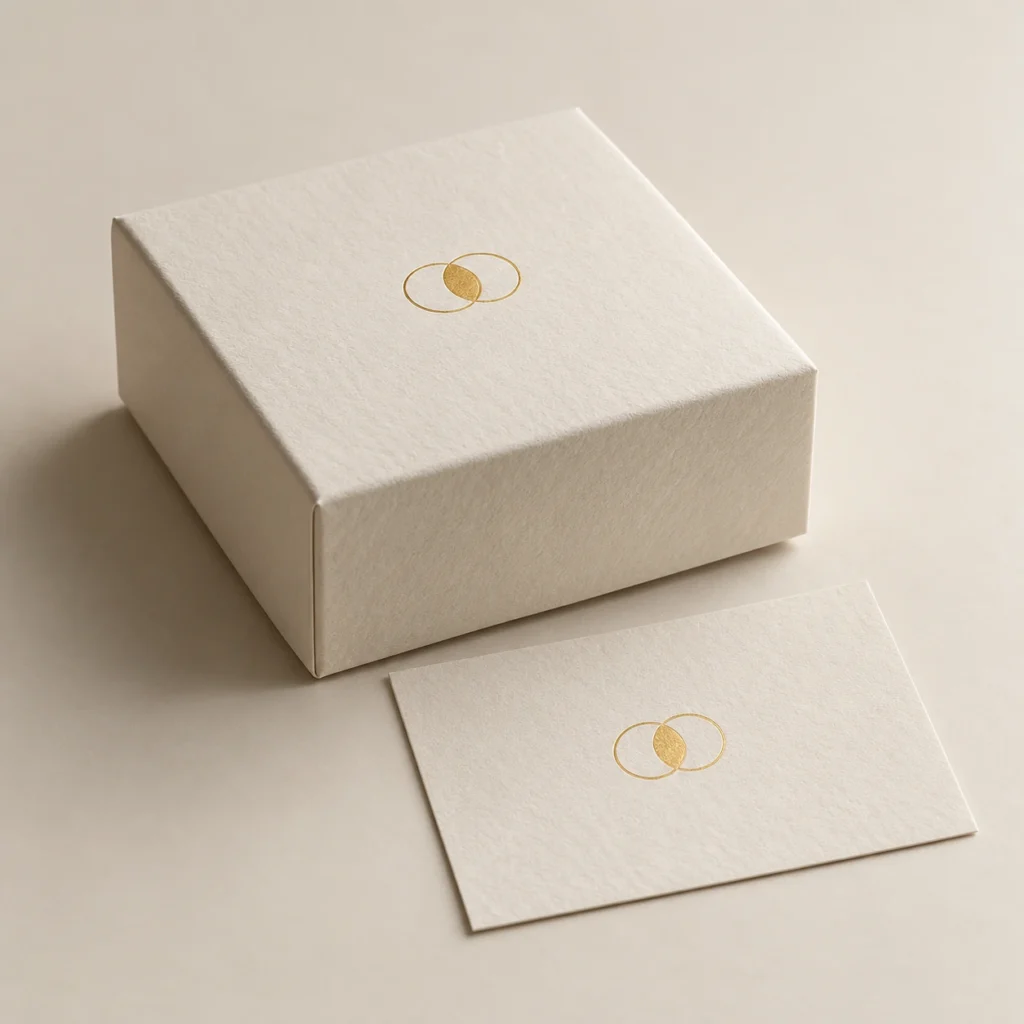
AI concept: an ivory box and paper sample with a small gold-coloured reflective foil motif.
Approve the finish on the surface that will be supplied
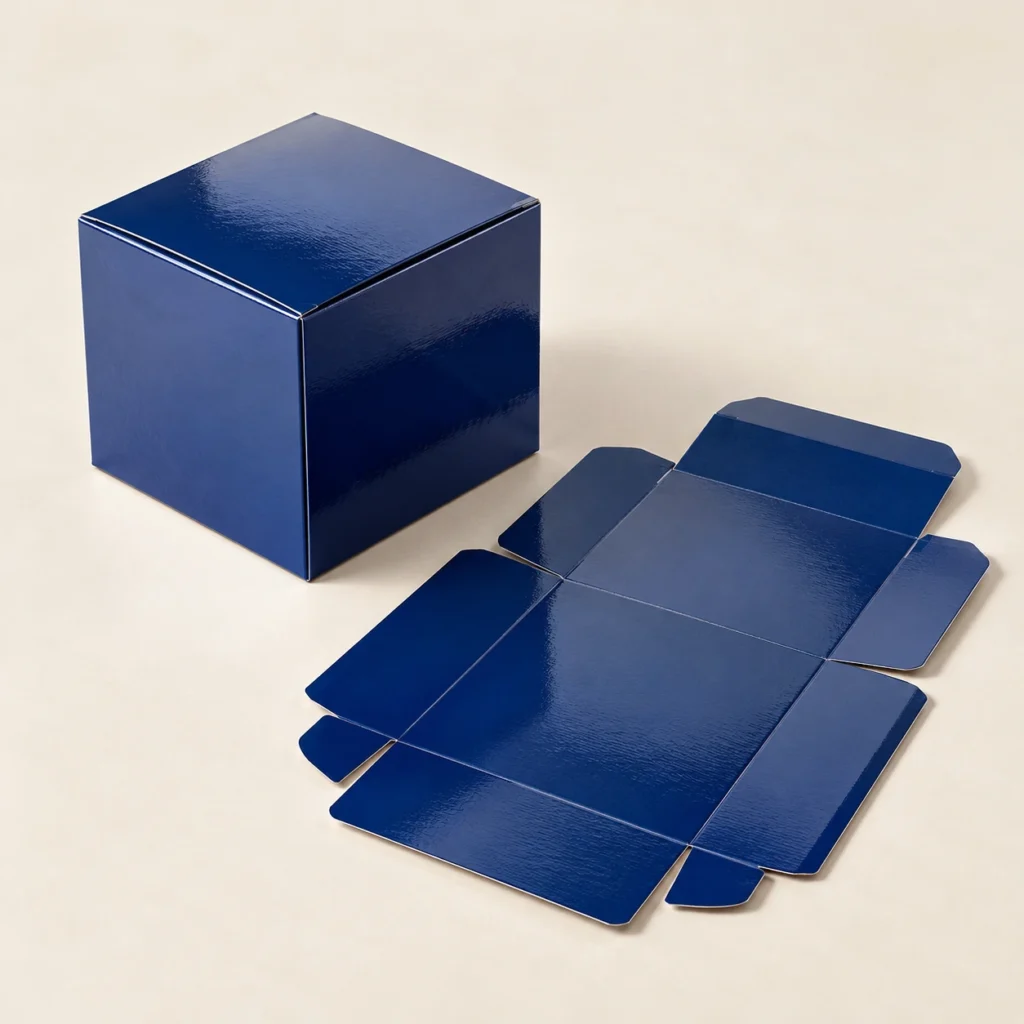
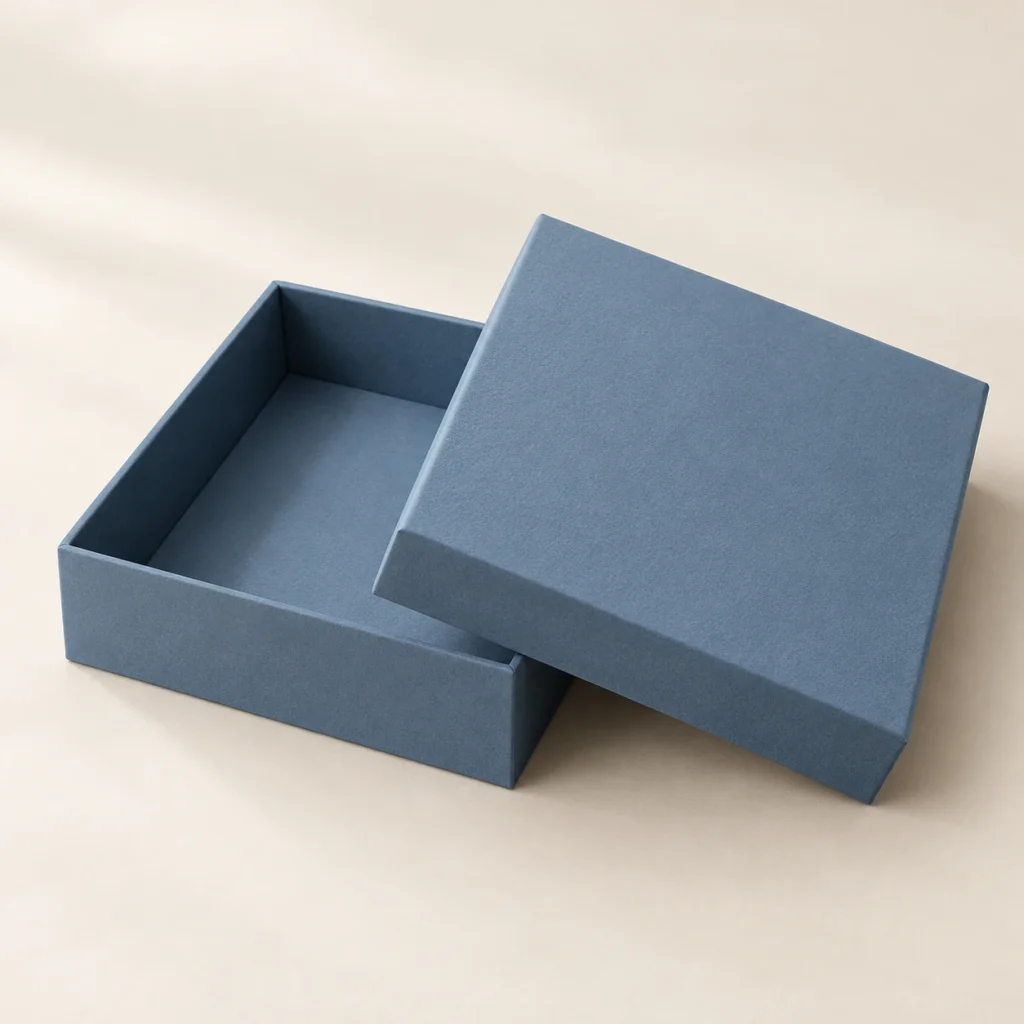
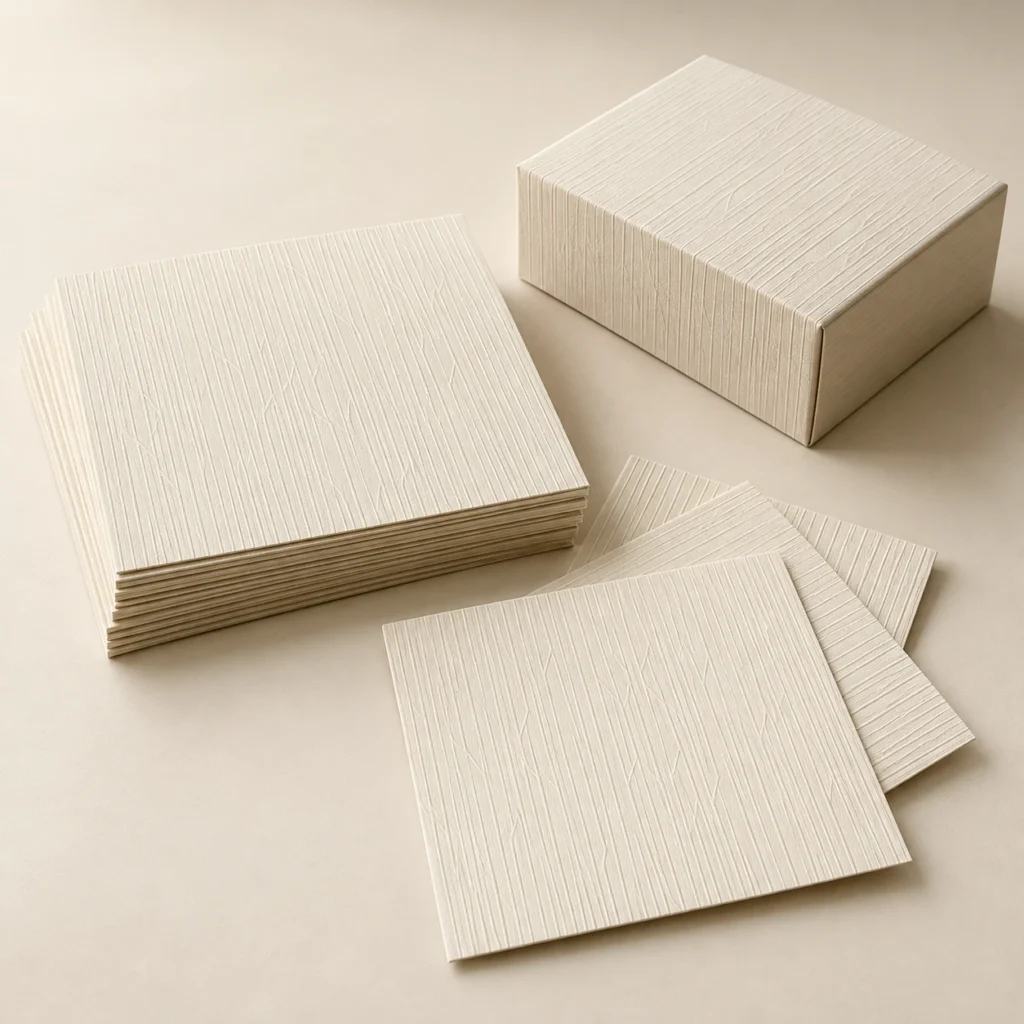
Premium-brand buyers should decide which part of the pack needs emphasis before adding several treatments. Foil can create a reflective detail; embossing or debossing changes relief; spot UV creates a local gloss contrast. Matte, gloss and soft-touch laminations change the broader surface. Review a representative area on the chosen paper and consider creases, corners, lining and the way the pack is handled.
What to put in the brief
Mark the finish areas independently from printed artwork.
Assess fine details and registration on the intended paper or wrapped panel.
Agree the sample and appearance criteria instead of relying on a finish name alone.
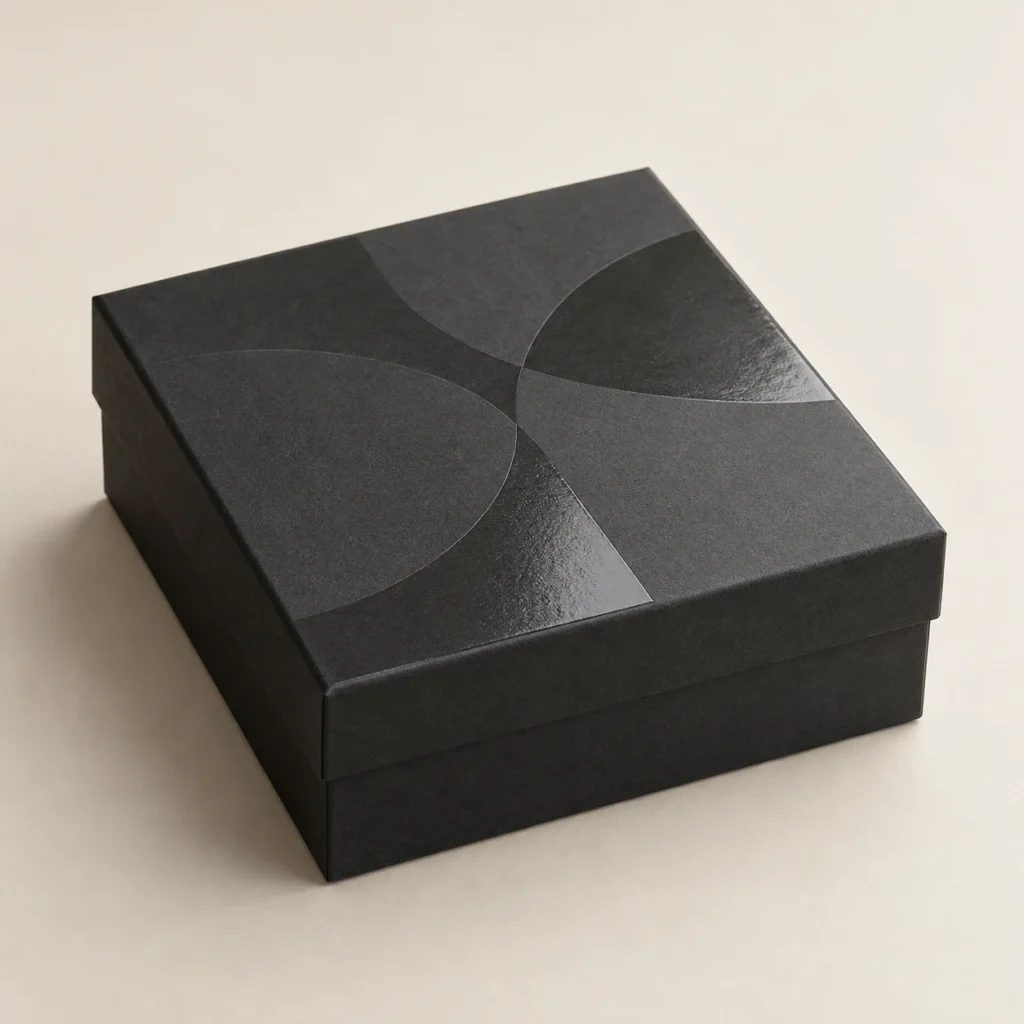
AI concept: a charcoal box with contrasting glossy geometric areas on its matte lid.
Questions to resolve before the next step
Can a paper texture replace embossing or soft-touch lamination?
These are different material and finishing routes. Compare the actual substrate and treated sample for the intended effect, converting method and project scope.
Can several surface treatments be combined?
Review their order, areas, substrate compatibility and sample scope for the project. The name of a finish does not establish that every combination is suitable.
Share the component, intended box or product, dimensions, artwork reference, estimated quantity and destination. LUX BOX will review the selection and sampling scope. Material and accessory supply conditions are confirmed for the project.
A product photo and a rough quantity are enough to begin. Our purchasing and structural teams will clarify dimensions, materials and finishes with you step by step. Standard MOQ is near 1,000 pieces; smaller runs require review.



 Surface Finish