How to Package Reed Diffusers Safely
Plan bottle retention, reed separation and case packing for shipment, with separate checks for the liquid closure and transport requirements.
Packaging Design Inspiration
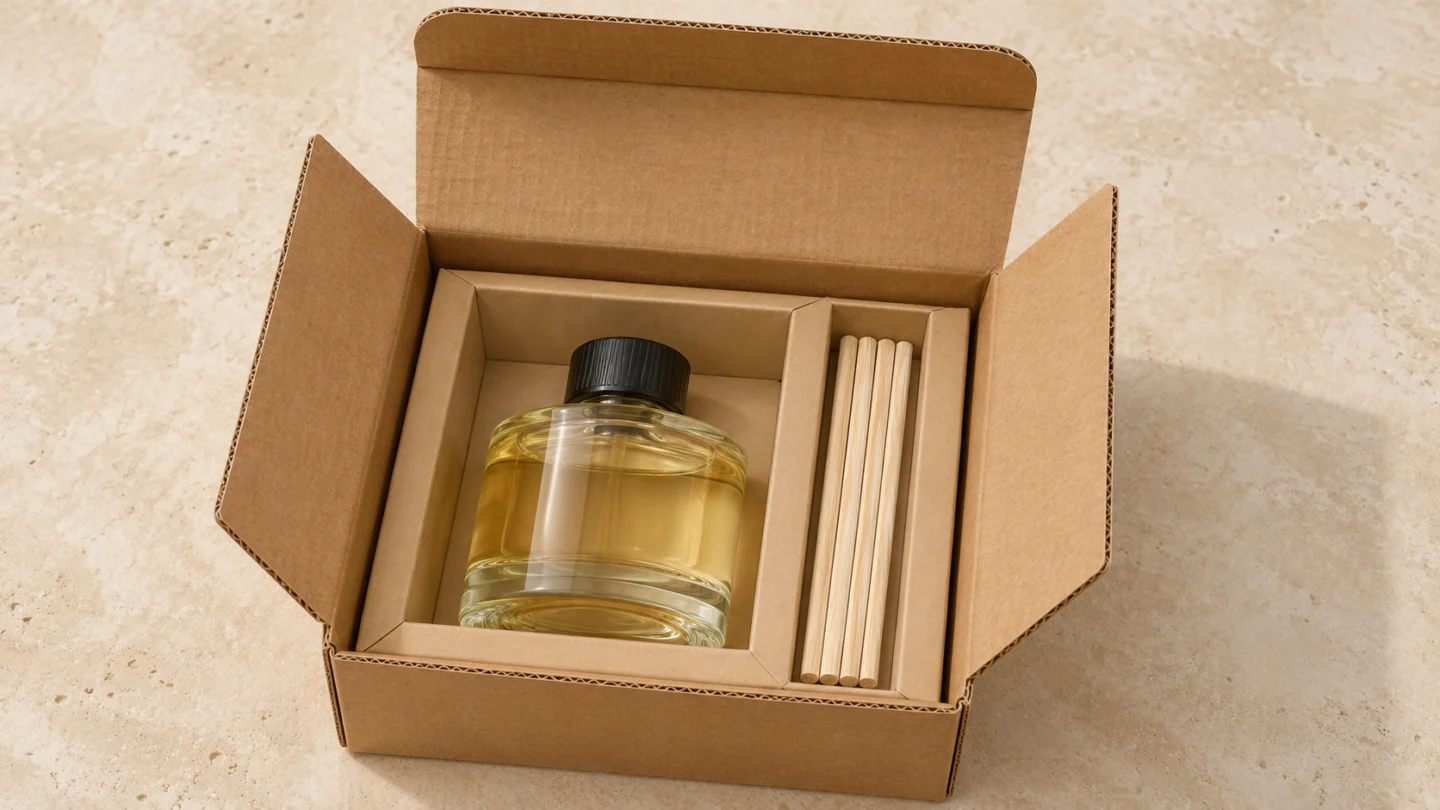
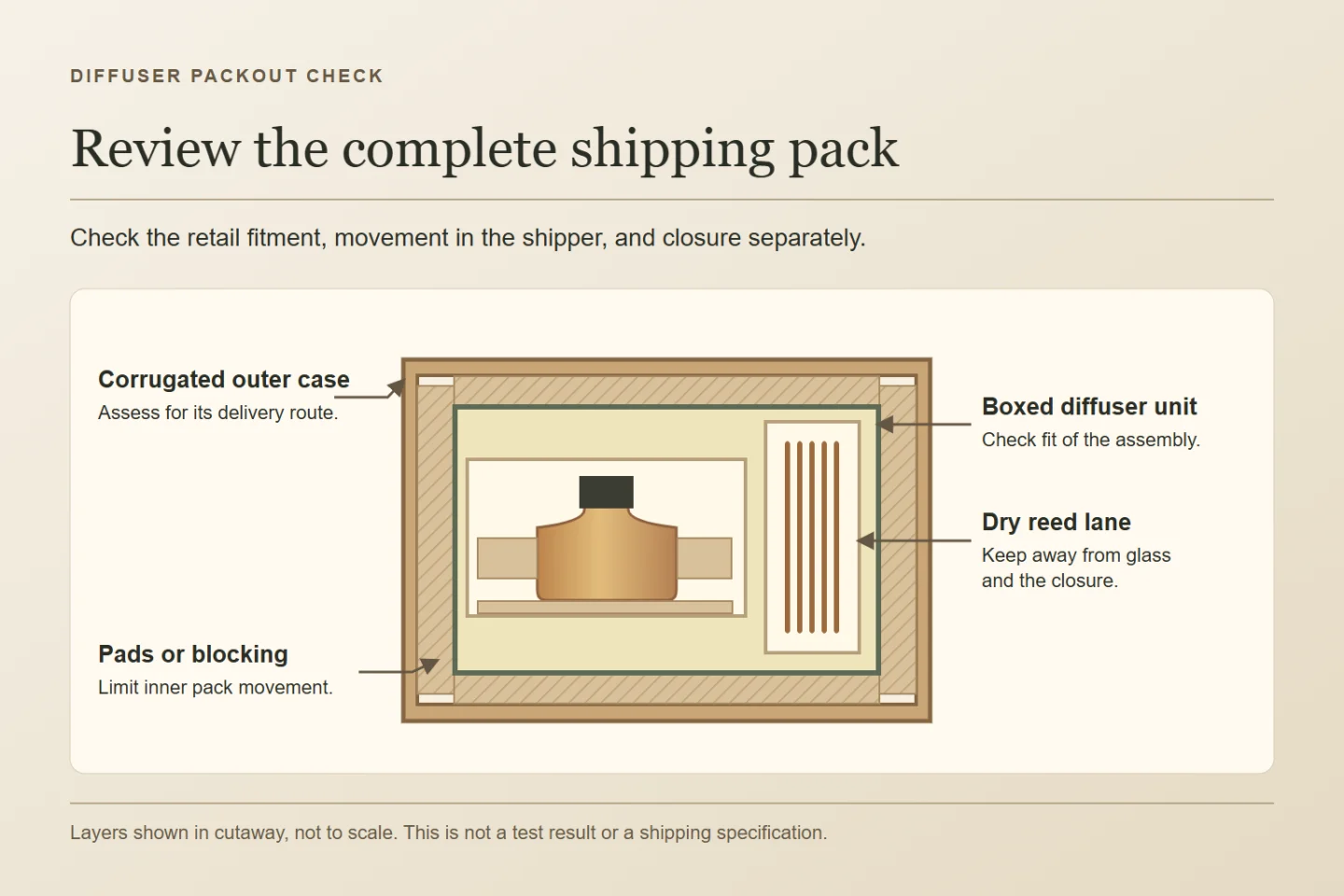
If you’re deciding how to package reed diffusers for shipping, start with a filled glass bottle fitted with its intended shipping closure. Support the glass with a fitted insert, pack the dry reeds and any loose accessories separately, and check the finished retail pack inside the corrugated carton it will actually travel in. Each layer has a different job. The closure retains the liquid, the insert limits movement, and the outer carton protects the packed units during handling.
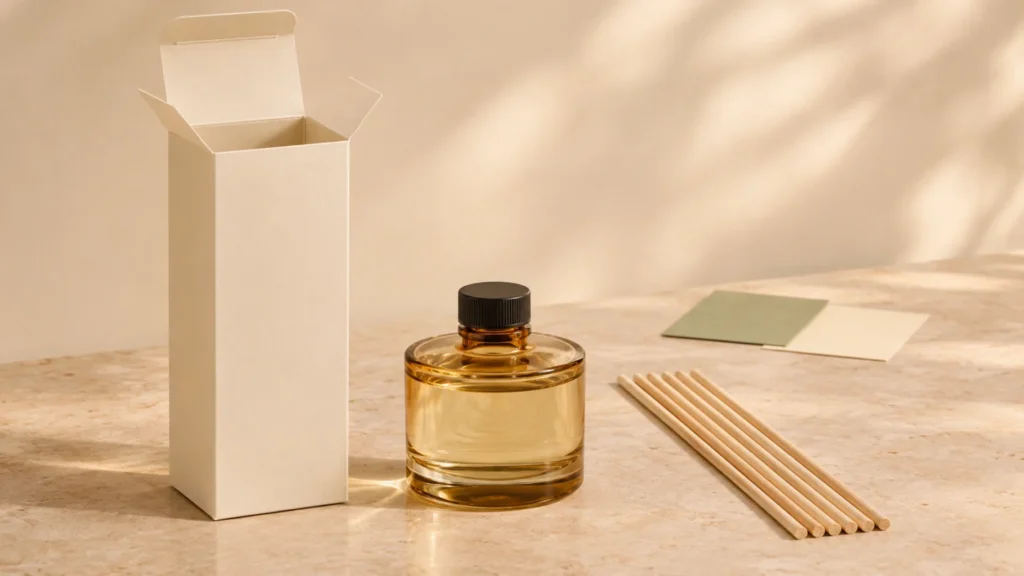
Choose packaging for reed diffusers around the way you fulfill orders. A single bottle sent directly to a customer has a different outer pack from a wholesale case full of retail boxes. If you are still choosing the opening style or deciding how to present a gift set, start with these reed diffuser packaging ideas. Once that layout is set, review it under the relevant shipping conditions.
Identify the Risks Before Selecting the Box
Three failures call for separate checks. Liquid can escape at the closure, glass can strike a hard surface, and reeds or loose accessories can shift inside the box. A bottle can arrive intact and still leak. It can also remain sealed but chip at the base, or arrive with a creased reed bundle. Build the brief around what could fail, where it could happen and what you would reject on arrival.
Ask the product supplier to identify the component that seals the filled bottle. Some designs use a removable stopper beneath a decorative collar, while others use a closure assembly specified for that bottle. A display collar or spare cover may leave the opening exposed by design. Check the finished bottle and closure with the product supplier. A tighter paper insert cannot correct a poor seal, and any secondary containment specified for the shipment serves a separate purpose.
Confirm the shipping requirements for the actual formulation with your product safety or logistics team and the intended carrier. Share the current safety data sheet where applicable, along with the route, service and quantity. Carrier guidance for ordinary liquids does not establish whether a particular fragrance mixture can travel by that service.
Measure the Filled Bottle and Choose a Retail Box
When packaging a glass reed diffuser bottle, take dimensions from the finished assembly. Record the widest part of the body, the shape of the base, the shoulder profile and the height with the intended closure fitted. Weigh the bottle filled. Flag any glass seam, label or coating that might rub against the insert, and compare physical samples if bottle dimensions vary within an approved range. If the vessel and paper packaging come from different suppliers, share the same reference samples or approved drawings through glassware and packaging coordination.
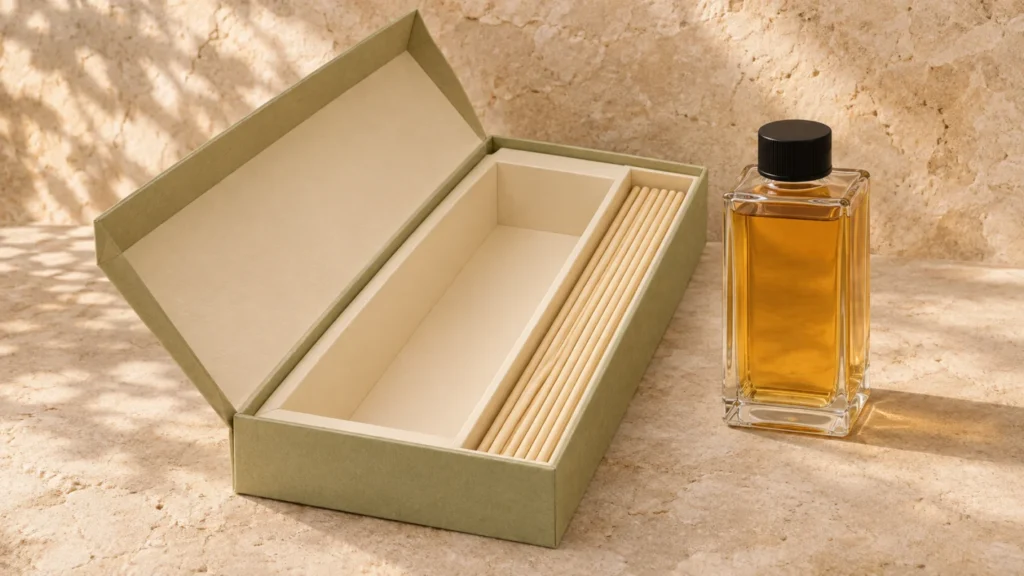
A folding carton can organize a single bottle and reed bundle when it has room for the required supports. A rigid box can give a gift set more space for separate components. In either case, check that the top and bottom panels close cleanly around the insert. Leave space for the necessary restraints and clearance before approving the outside dimensions. Compare diffuser packaging formats if you have not yet chosen an inner box.
Fit the Insert to the Glass
When evaluating reed diffuser inserts for shipping, ask the supplier to show how the insert supports the filled bottle in each direction. A base seat should follow the stable part of the bottle’s profile. Side supports should limit travel without pinching the glass or scuffing a label. If the bottle can lift out of the seat when the pack changes orientation, evaluate retention at an appropriate part of the body or shoulder. Leave clearance above the cap so the closed box does not press on it.
| Insert feature | Job inside the pack | What to check on a sample |
|---|---|---|
| Shaped base seat | Supports the filled bottle at its base | The bottle seats fully and does not rock on a raised fold. |
| Side supports | Limit lateral movement | The glass clears the box walls and the label does not catch during removal. |
| Upper restraint and cap clearance | Limit lift while leaving room above the closure | The bottle stays in its seat and the closure shows no contact mark from the box. |
| Reed lane or accessory pocket | Keeps loose pieces away from the bottle | Reeds and hardware stay in their own compartments when the pack is handled. |
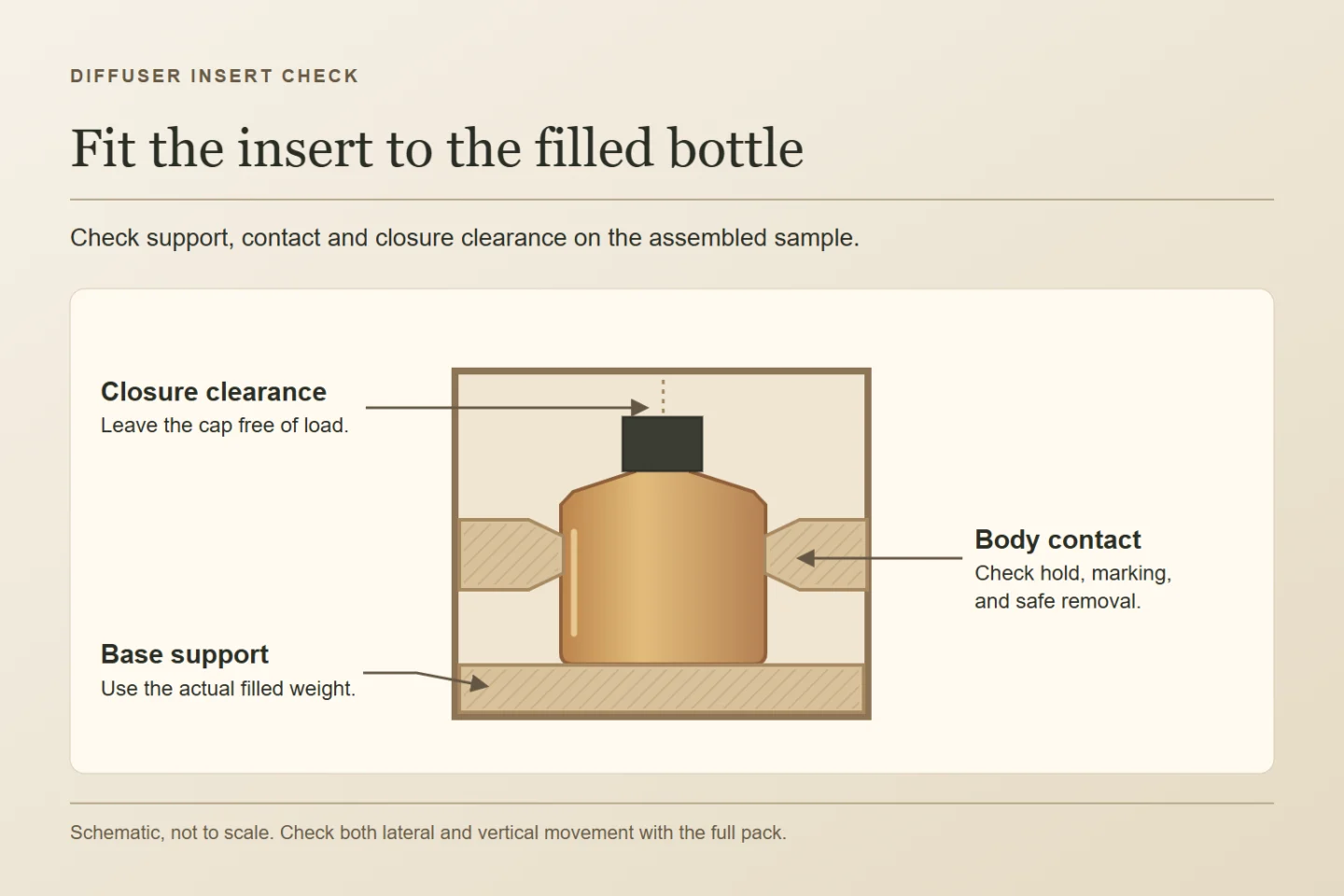
Folded paperboard may suit a shape that can be held by locating tabs and a defined base. Corrugated inserts can provide shaped support or separation where the box has room for their thickness. If the glass has an unusual profile, shaped EVA foam inserts are another option to sample. Compare all options with the filled bottle, including contact marks and how easily the packing team can seat and remove it.
Keep Dry Reeds and Loose Hardware Separate
To protect diffuser reeds from bending in transit, measure the wrapped bundle at its full length and thickness. Keep it in a dedicated lane or a retained sleeve with room at both ends. The bundle should slide out without catching on a fold or running into the bottle. A paper wall or a tucked end can keep the reeds from slipping out of their lane. Keep the reeds dry and uninstalled until use.
If a decorative collar, cover or refill accessory ships loose, give it its own pocket. Fit the intended shipping closure to the bottle before packing. Secure the pocket so hardware cannot slide out, strike the glass or slip under the base seat. Check this with the instruction card in place so the card does not block the pocket or press down on the reeds.

Pack Retail Boxes in a Corrugated Outer Carton
For parcel shipments, place the individual retail box inside an outer carton with supports appropriate to the packed weight and available space. Keep the retail box away from direct contact with the outer walls where the design calls for cushioning. Check that it cannot slide into a corner or compress the bottle closure if the carton is handled on its side. An upright mark communicates the intended orientation, but handling may change that orientation.
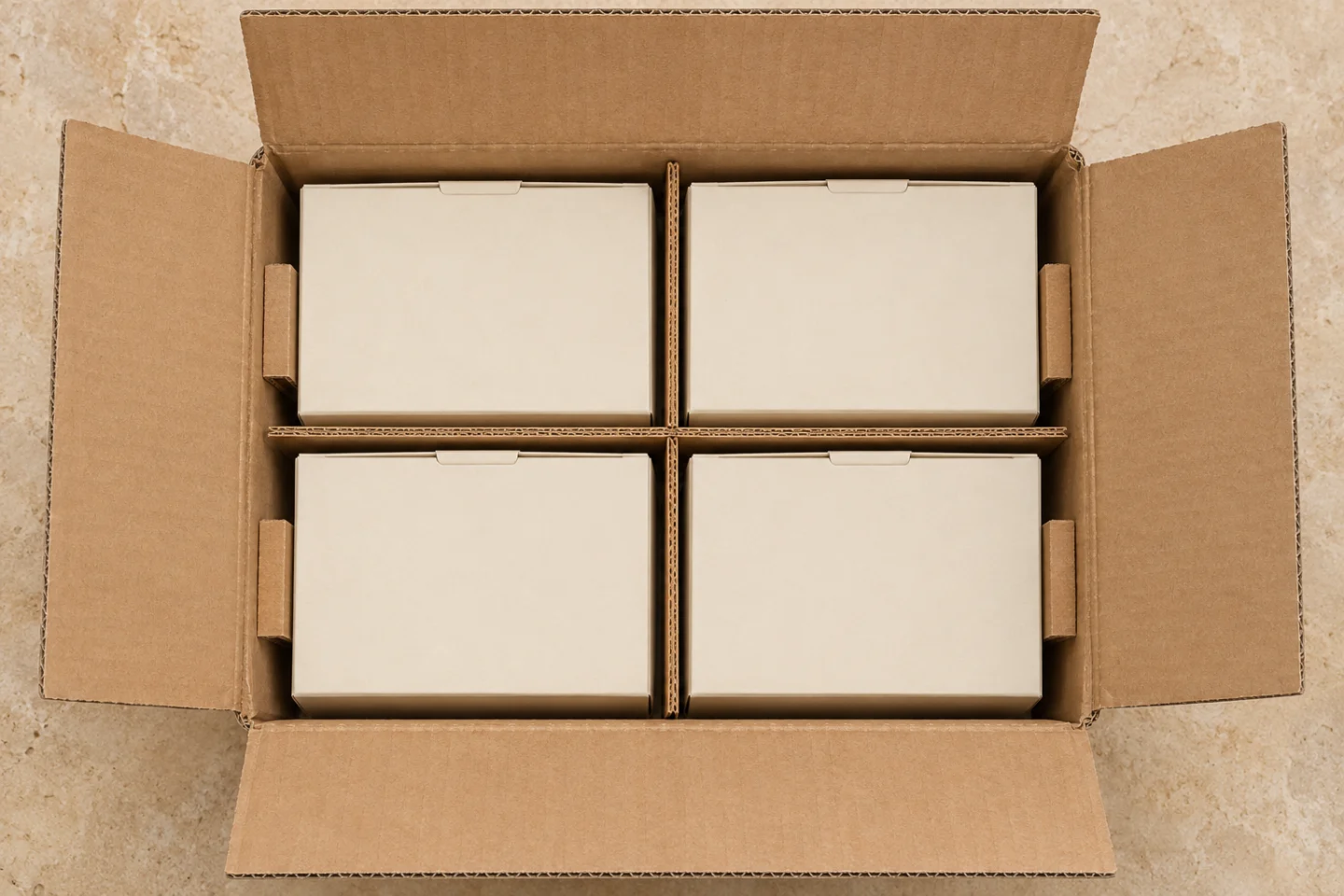
For wholesale, build the sample at the actual case count. Use dividers or partitions where needed to separate the retail boxes and prevent the row from shifting. Check the whole case for clearance above the units, panel bowing and whether a divider stays seated when the outer carton is closed. If you also ship partial cases, define their packing arrangement separately. Simply removing units from a full case can create a gap that lets the remaining boxes move.
Check the Complete Pack Before Shipment
Use a representative finished pack to make the release decision. An unfilled bottle is useful during the first fit check. Use filled bottles with the final closure, reeds, accessories and labels when checking the production configuration.
- Verify assembly. Pack and unpack a unit using the same sequence as the packing team. Confirm that the closure clears the top, the glass sits in its seat, the bottle can be removed without pulling on the closure and the reeds stay in their lane.
- Build the shipment as planned. Use the specified carton, case count and any approved cushioning, separators and containment. Record the materials and packing order so the team can reproduce the sample.
- Agree on the test and acceptance criteria. Choose an evaluation with a qualified provider or logistics team based on the actual distribution route. Ask whether drops and vibration apply to the parcel route and whether stacking loads should be evaluated for the wholesale case. The ISTA guide to design and testing explains how the distribution environment affects test selection. Set criteria for liquid leakage, closure movement, glass damage, displaced inserts or reeds, and unacceptable marks on the retail box.
- Record the approved configuration. Review the results before you release the pack. Check whether a change in bottle, closure, insert, case count or shipping route calls for another evaluation. A sample that fits at the packing bench is still only a fit check.
Frequently Asked Questions
How should a glass reed diffuser bottle be fixed in a paper box?
Use an insert shaped around the actual filled bottle. Support its base, control sideways movement around suitable body surfaces and keep pressure off the cap. Check the closed retail box and its intended outer pack with the finished product.
Do diffuser reeds need separate compartments?
Give the wrapped reeds a dedicated lane, pocket or fixed sleeve so they stay dry and clear of the glass. A supported sleeve can do the job when there is no room for a separate tray cavity, as long as the bundle stays in place and comes out without bending.
Prepare Your Diffuser Packaging Brief
Send the filled bottle dimensions and weight, closure details, reed bundle measurements, accessory list and quantity per shipping case. Include the planned packing and delivery method. Share your diffuser packaging brief with LUX BOX to discuss the paper box, insert and sample requirements.